Conceptual Future Tense
2025
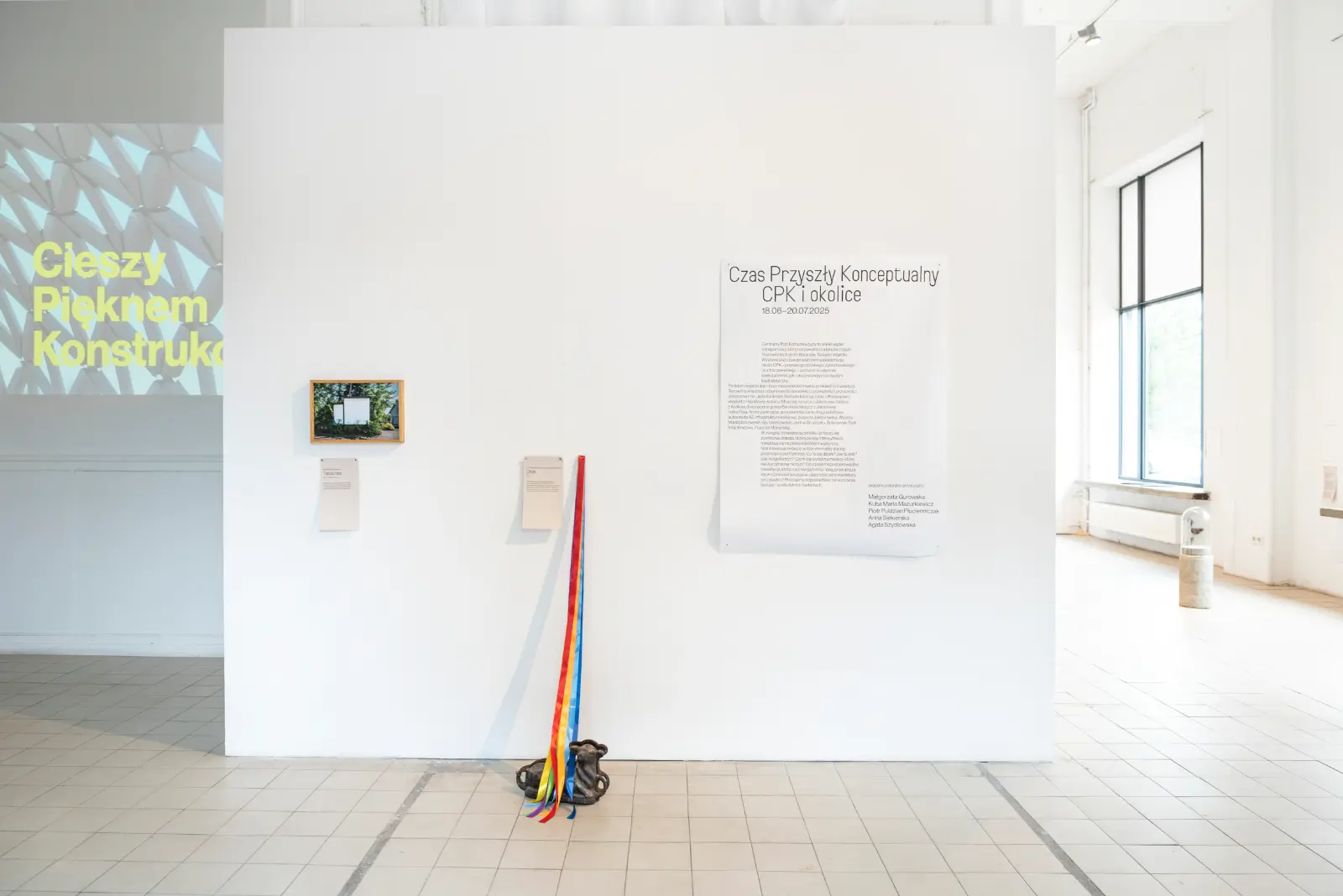
Conceptual Future Tense: The CPK and Its Environs was the culmination of several years of artistic research. The exhibition ran at Pracownia Wschodnia gallery in Warsaw from June 18 to July 21, 2025. As part of the artistic and curatorial collective behind the project (whose other members were Małgorzata Gurowska, Piotr Puldzian Płucienniczak, Anna Siekierska, and Agata Szydłowska), I contributed to both the research and the exhibition’s final form. One of elements of the project is also the publication Czasoprzestrzenna Podróż Krajoznawcza. Okolice Baranowa [Time-Space Sightseeing Trip: The Baranów Area].
Here is a fragment of the curatorial text:
CPK—Centralny Port Komunikacyjny [The Central Communication Port]—is a planned multifunctional nexus designed to integrate air, rail, and road transport. It is located near Baranów, approximately forty kilometers west of Warsaw. Our artistic project explored the temporal and spatial dimensions of the CPK’s surroundings, i.e., the counties of Grodzisk, Żyrardów, and Sochaczew, from both a speculative perspective and within the framework of capitalist realism. Our starting point was the image of Mazovian villages on the eve of this massive investment. This sleepy landscape evokes stories from the past and future, both realized and imagined. Its protagonists include the bridge in Radziejowice, the viaduct in Hipolitów, the chimney in Moszna, the last aurochs of Jaktorów, the plaque in Kaski, the waterways of the Baranów commune, the tick in Jaktorów, the Pisia River, animal farms, potato fields, asphalt roads, the A2 motorway, railway infrastructure, the Jaktorowska and Mariańska Primeval Forest, the Międzyborów Dunes, the Baranów meadows, the park in Grodzisk, and the Bolimów Landscape Park.
I described our methodology in the article Hyperlocal Artistic Research: Baranów / Central Communication Port published in the magazine View. Theories and Practices of Visual Culture. At the exhibition, I presented my photographs, a video, and a joint sculpture-installation.
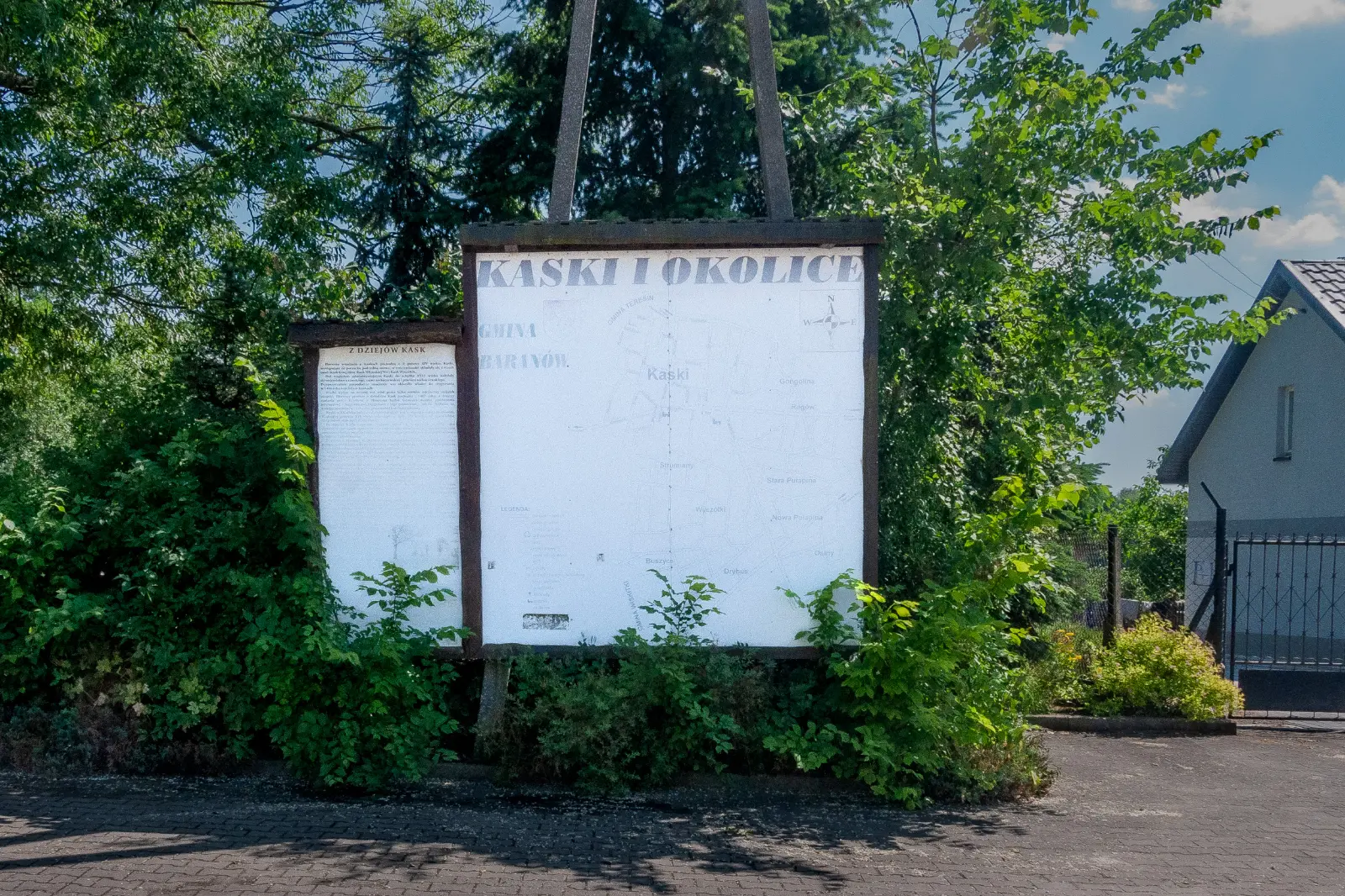
Kuba Maria Mazurkiewicz, Tabula Rasa, digital photography, 2021
The photograph Tabula Rasa depicts a map standing next to a church in Kaski village. The sun’s rays consumed the outlines of places, leaving an empty board on which an airport, or anything else, may appear.
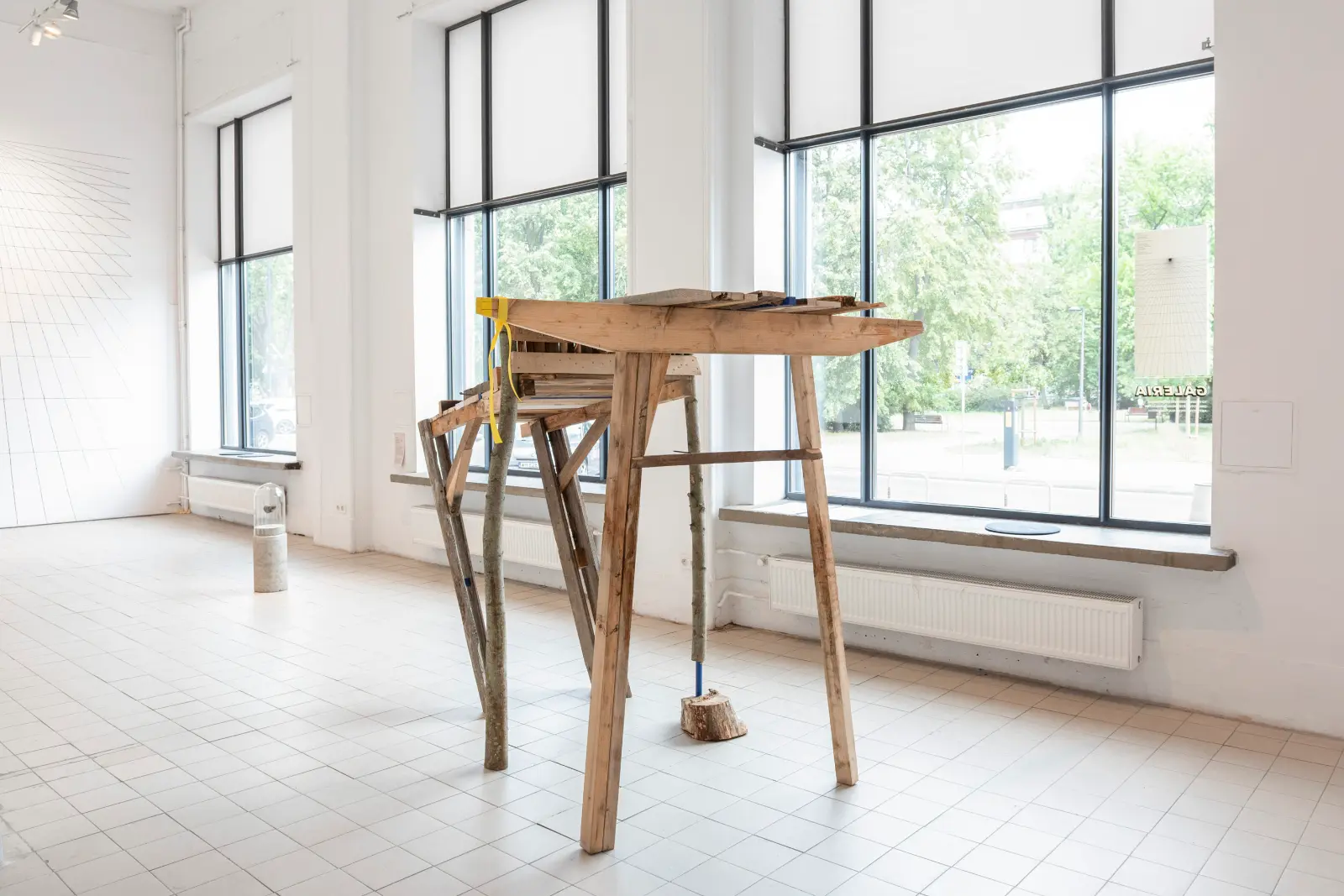
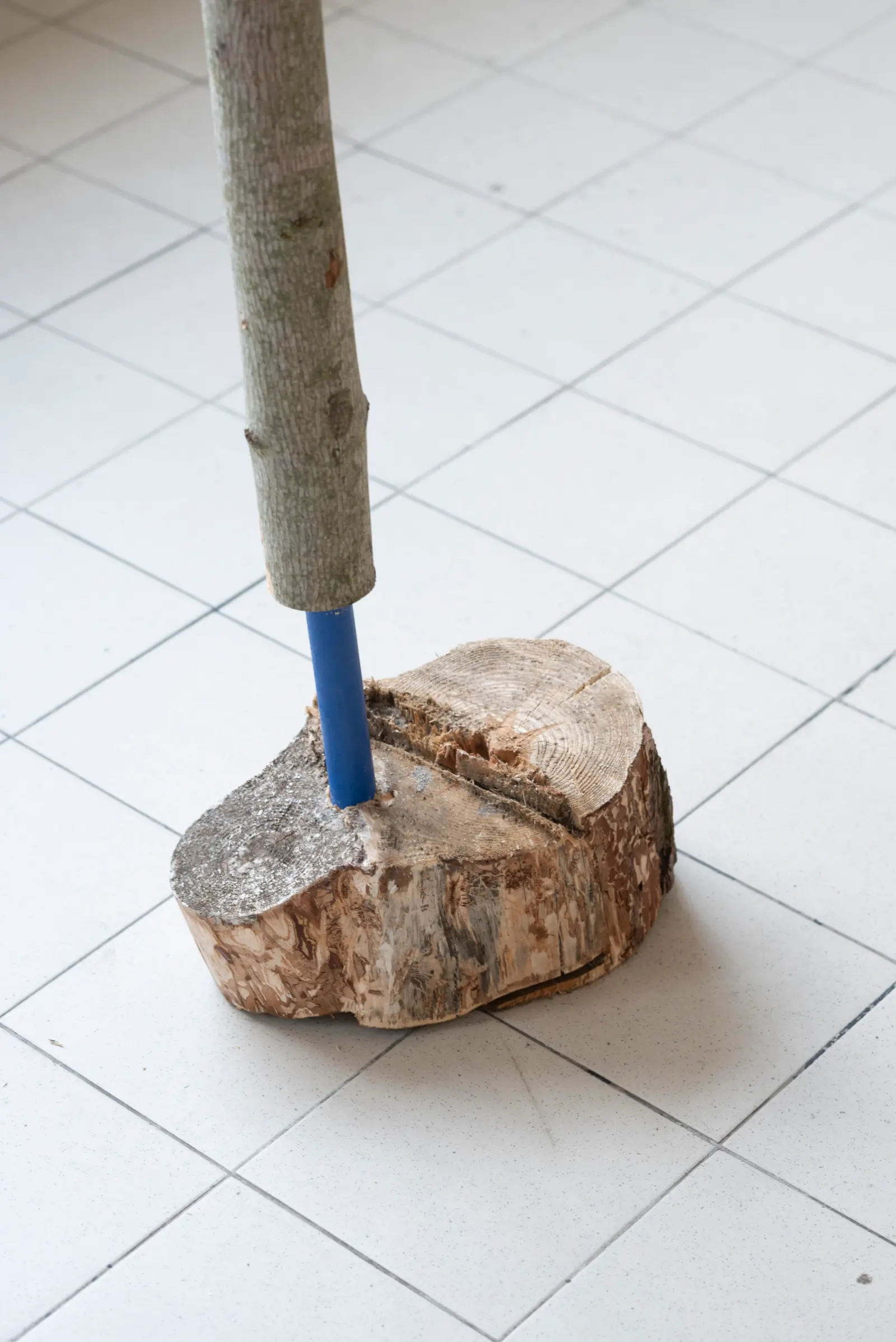
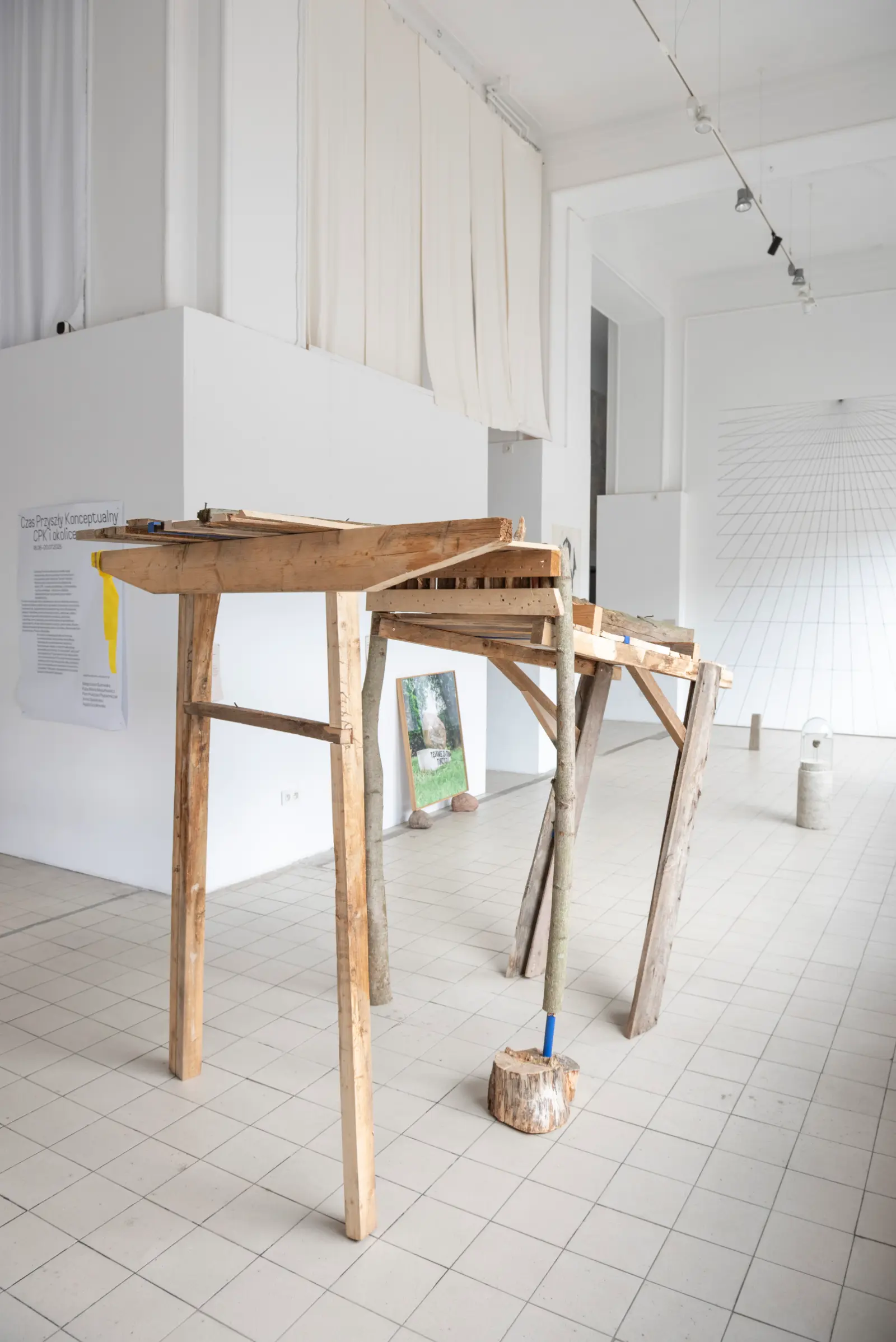
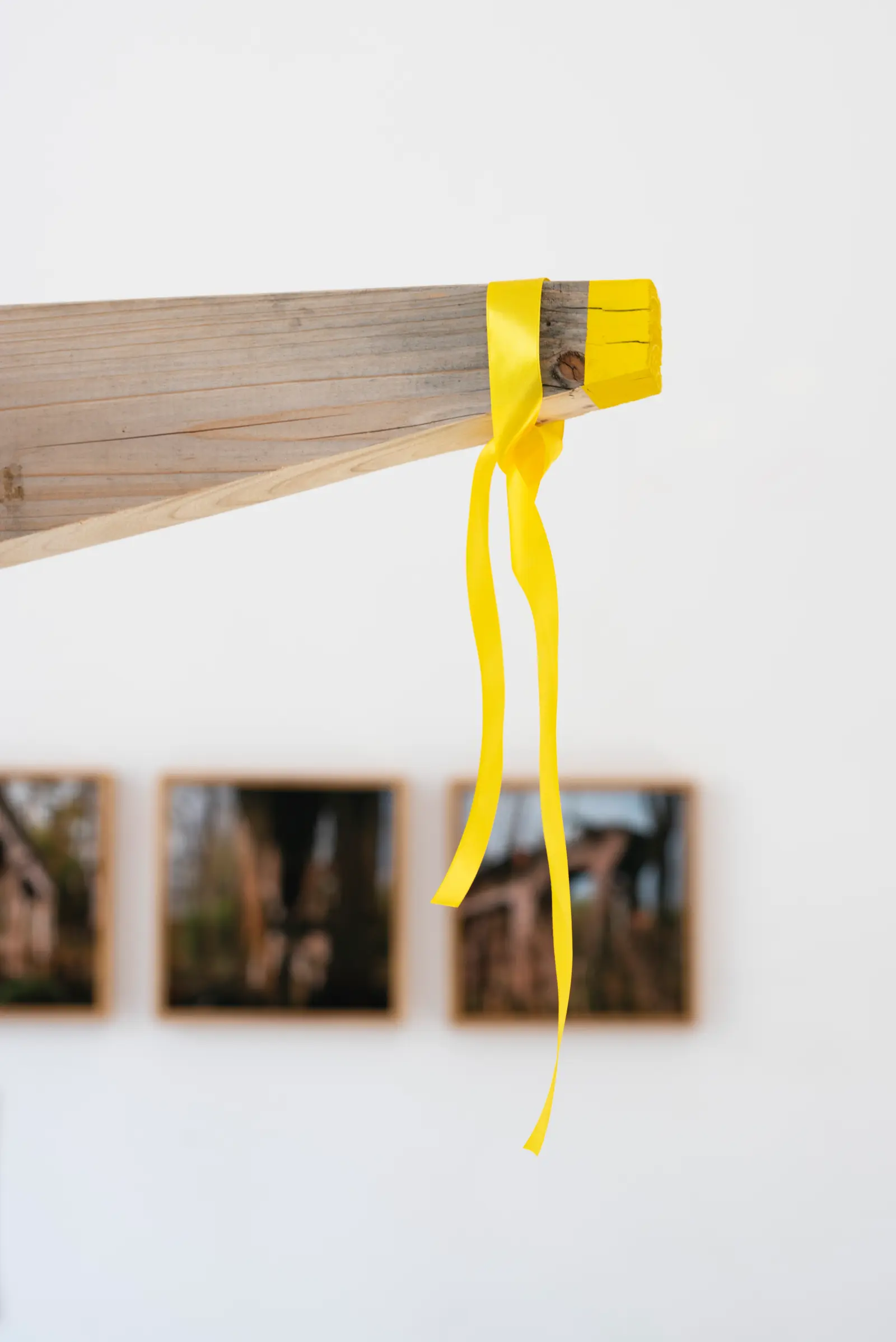
Małgorzata Gurowska, Kuba Maria Mazurkiewicz, Anna Siekierska, Ruin, wood, screws, acrylic paint, 2025
During one of our field trips, Karol Trammer showed us the unfinished bridge of the Electric Commuter Railway in Radziejowice-Parcela. The structure’s irresistible, animalistic character immediately struck us. While working on this installation, we explored what links an investment in ruins with a species in ruins – the last aurochs. The wood used to build Ruin comes from the vicinity of the Jaktorowska Forest.
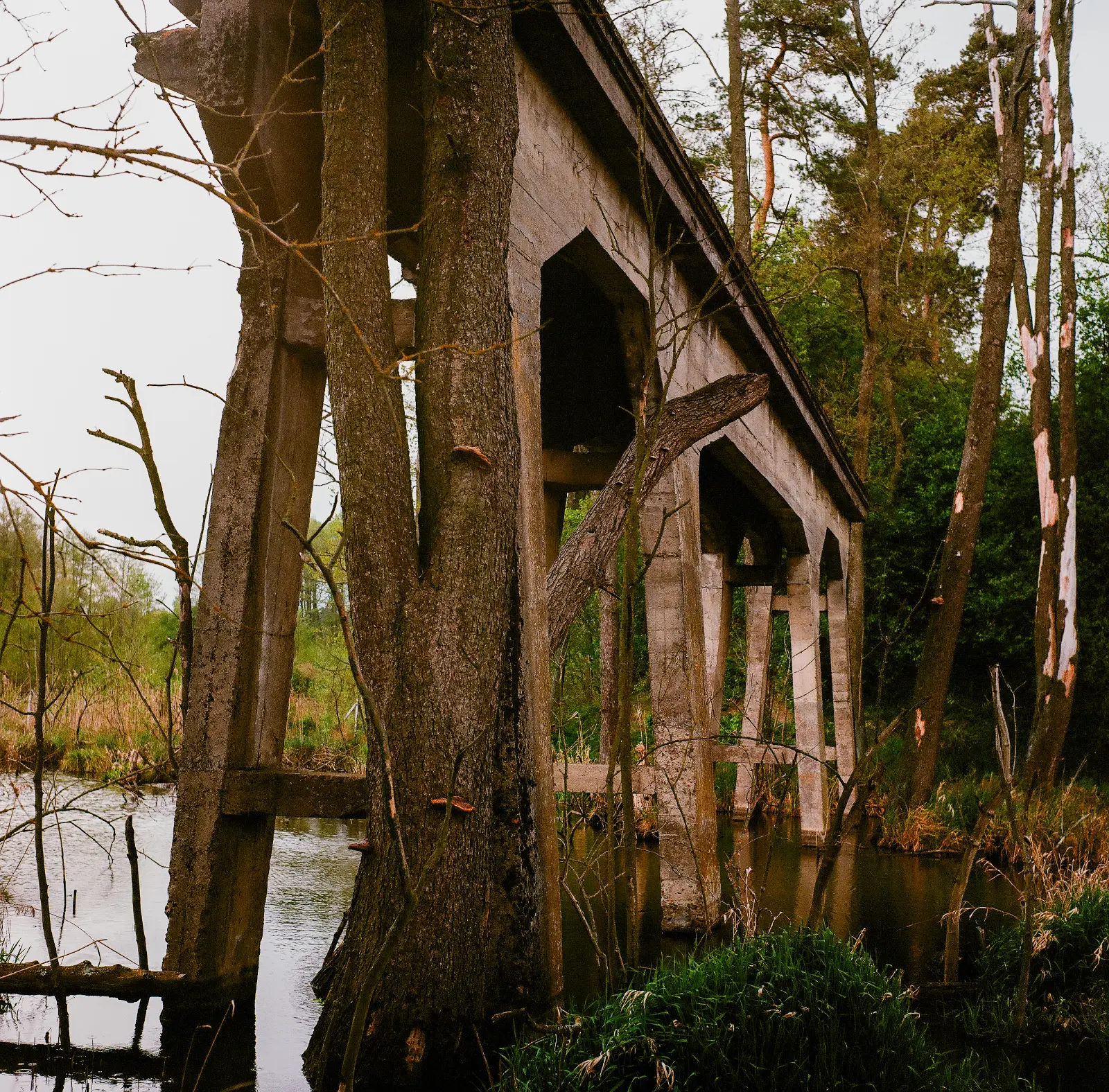
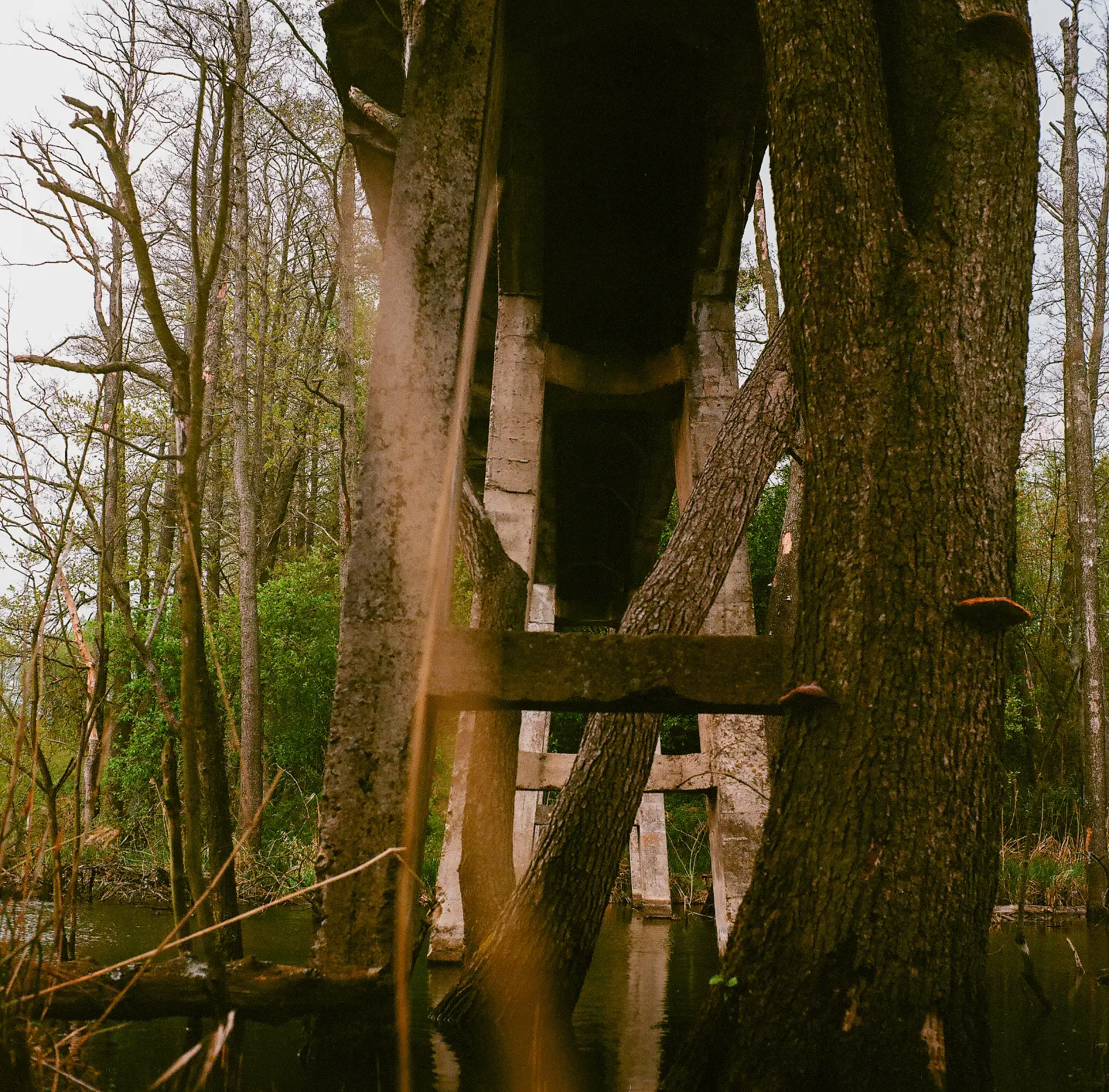
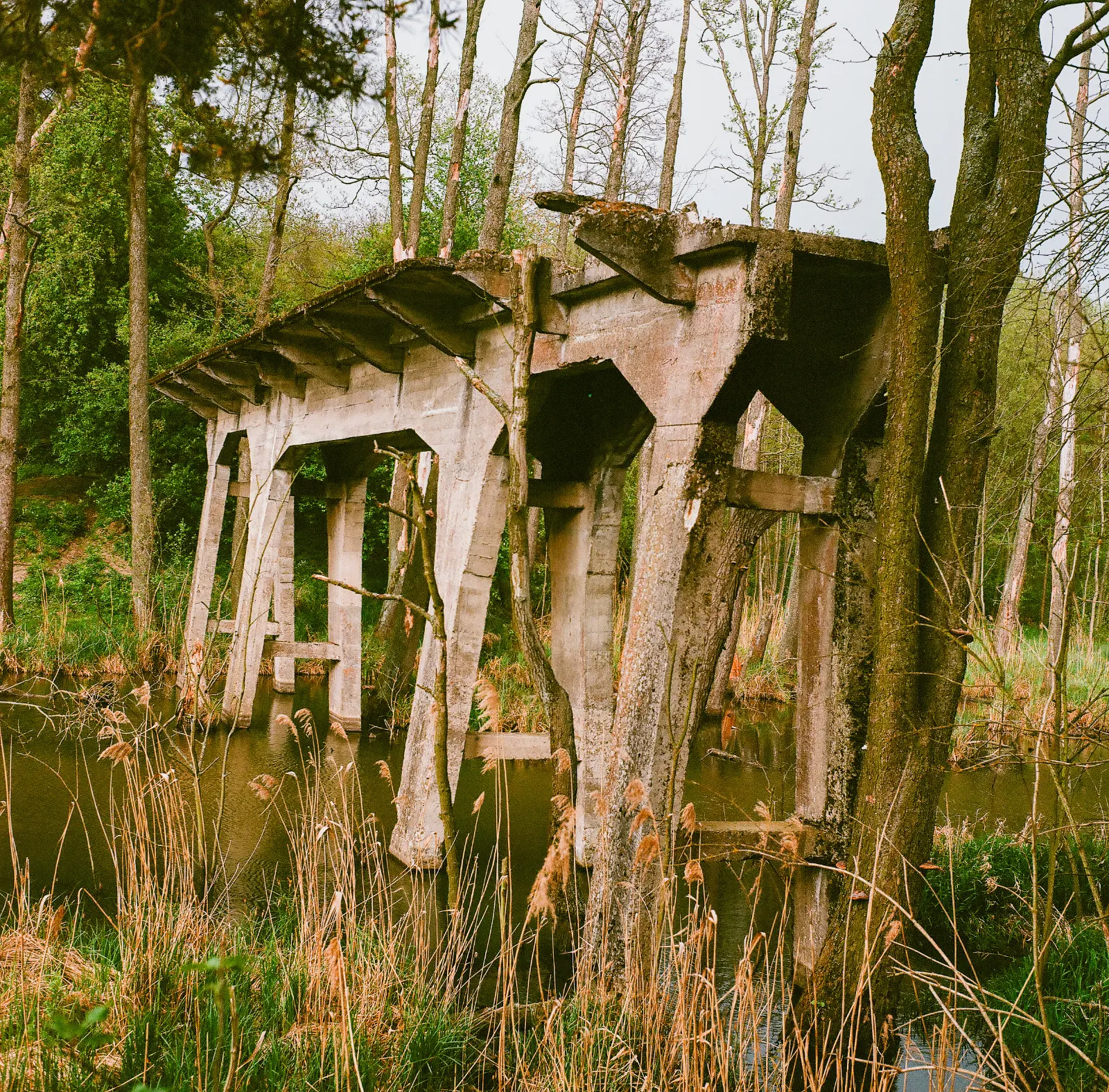
Kuba Maria Mazurkiewicz, Bridge over the Pisia River, triptych, digital photography, 2024
Siła i Światło [Power and Light], a joint-stock company registered in 1918 shortly after Poland regained independence, operated in the energy sector, initially acquiring shares in power plants managed by companies from the former partitioning powers of Germany and Austria. Among its acquisitions was the Pruszków power plant, which later supplied electricity to its own investment project: the Electric Commuter Railway from Warsaw to Grodzisk Mazowiecki. In the 1930s, authorities decided to extend the line from Komorów to Mszczonów. They purchased land and engineering work began, including the construction of embankments, culverts, and bridges. The ruins in the village of Przeszkoda and the most spectacular bridge over the Pisia Gągolina River in Radziejowice-Parcela have survived to this day. The outbreak of the Second World War halted the construction, which never resumed.
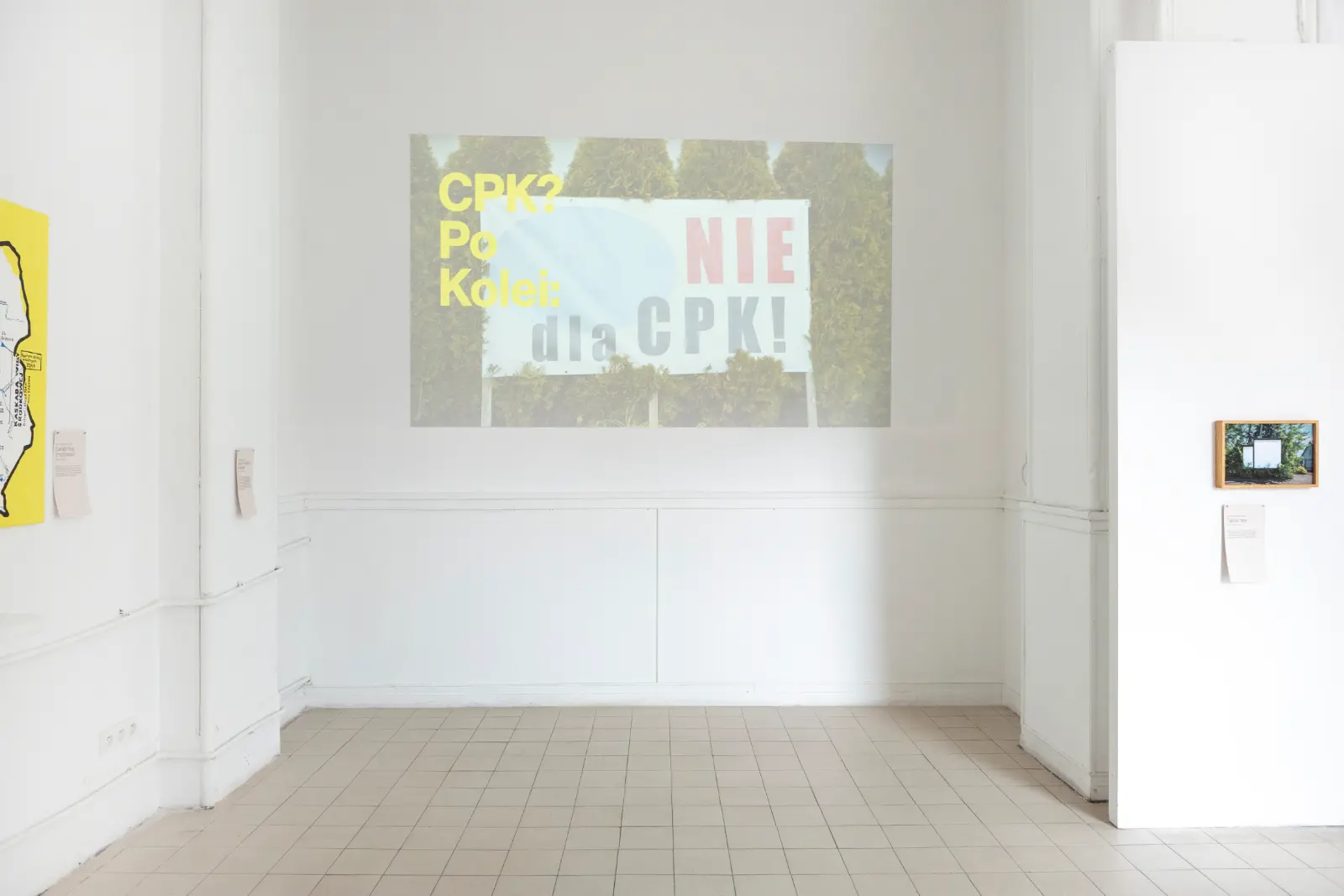
The plan to build a major airport is the subject of fierce public debate in Poland. The infrastructure investment has become an arena for ideological and emotional struggle, deepening further division among residents of the wider CPK region. It evokes euphoria, pride, and hope, but also anger, despair, and doubt. The video Cierpki Panegiryk. Krajanom! [A Bitter Eulogy to My Countrymen] is an animated adaptation of a poem of the same title. It offers impressionistic record of the public debate on the CPK project. The version with English subtitles is available on the View. Theories and Practices of Visual Culture website.
Kuba Maria Mazurkiewicz, A Bitter Eulogy to My Countrymen, looped video, 4:55, 2025
The photographic documentation of the exhibition was prepared by Paulina Mirowska from the Pracownia Wschodnia gallery.