I design 🪄 and create 👷‍♂️ art:
kubamaria@mazurkiewicz.work
00 48 669 269 930

Tectonic Movements

2022

From 18 November 2022 to 19 March 2023, the Muzeum Sztuki in Łódź hosted an exhibition entitled Tectonic Movements: On the Artistic Symptoms of the Transition. Curated by Jakub Banasiak, it featured over a hundred works of art created in Poland in the 1980s and 1990s. This was a period when the Polish People’s Republic was transforming into the Third Polish Republic. The exhibition followed a two-pronged approach: the first strand addressed economic and political issues—“the matter”—while the second focused on metaphysical questions and presented the diversity of spiritual attitudes during Poland’s period of transition.

In the visual identity, I used the Labil Grotesk typeface, whose slanted, unstable characters refer to the exhibition title, “Tectonic Movements,” as well as to the instability and ambiguity of the era.
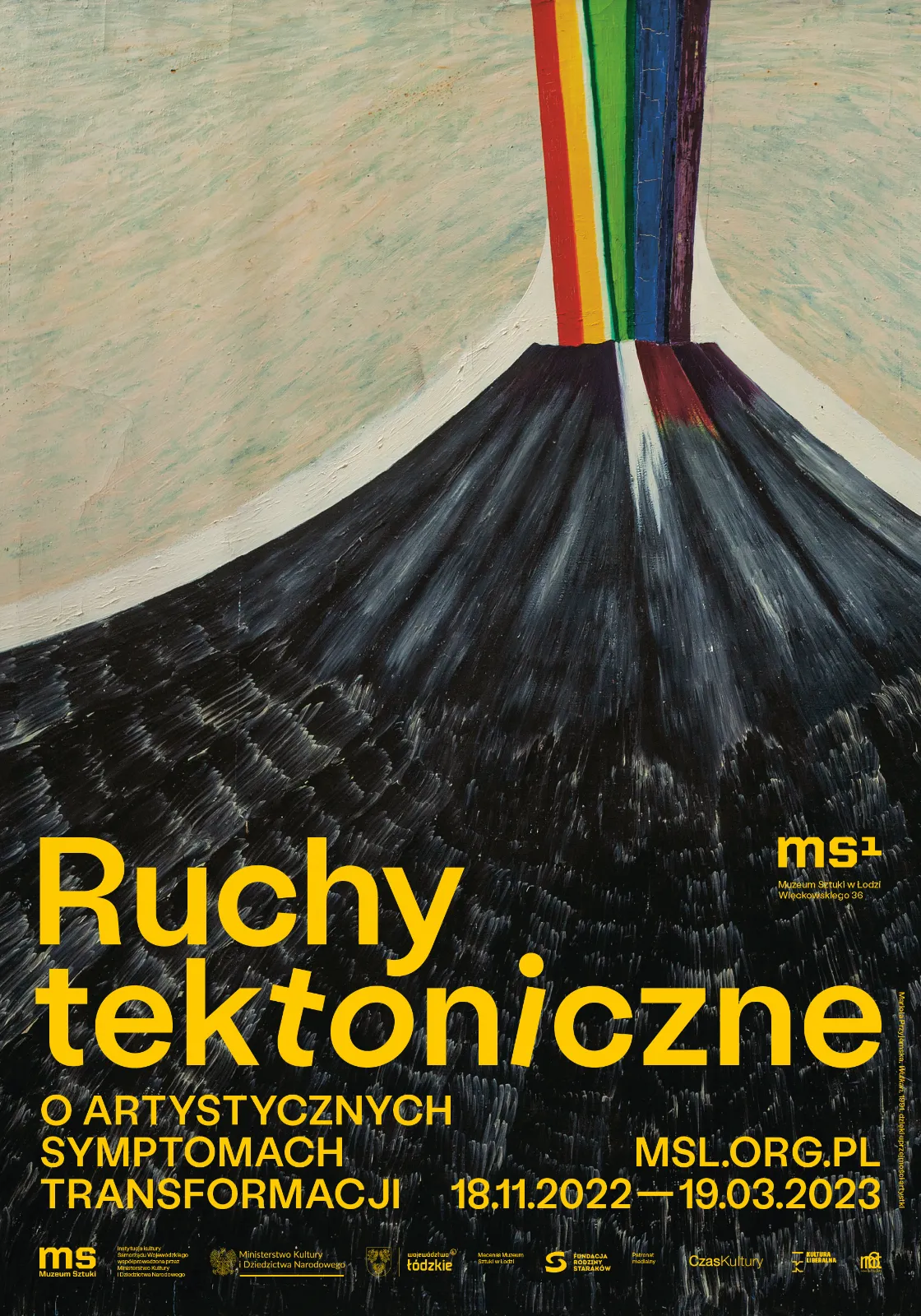
Exhibition poster for “Tectonic Movements.” The illustration features a black volcanic cone with a vertical rainbow-colored beam shooting from its peak. Large yellow text at the bottom displays the title and exhibition dates.
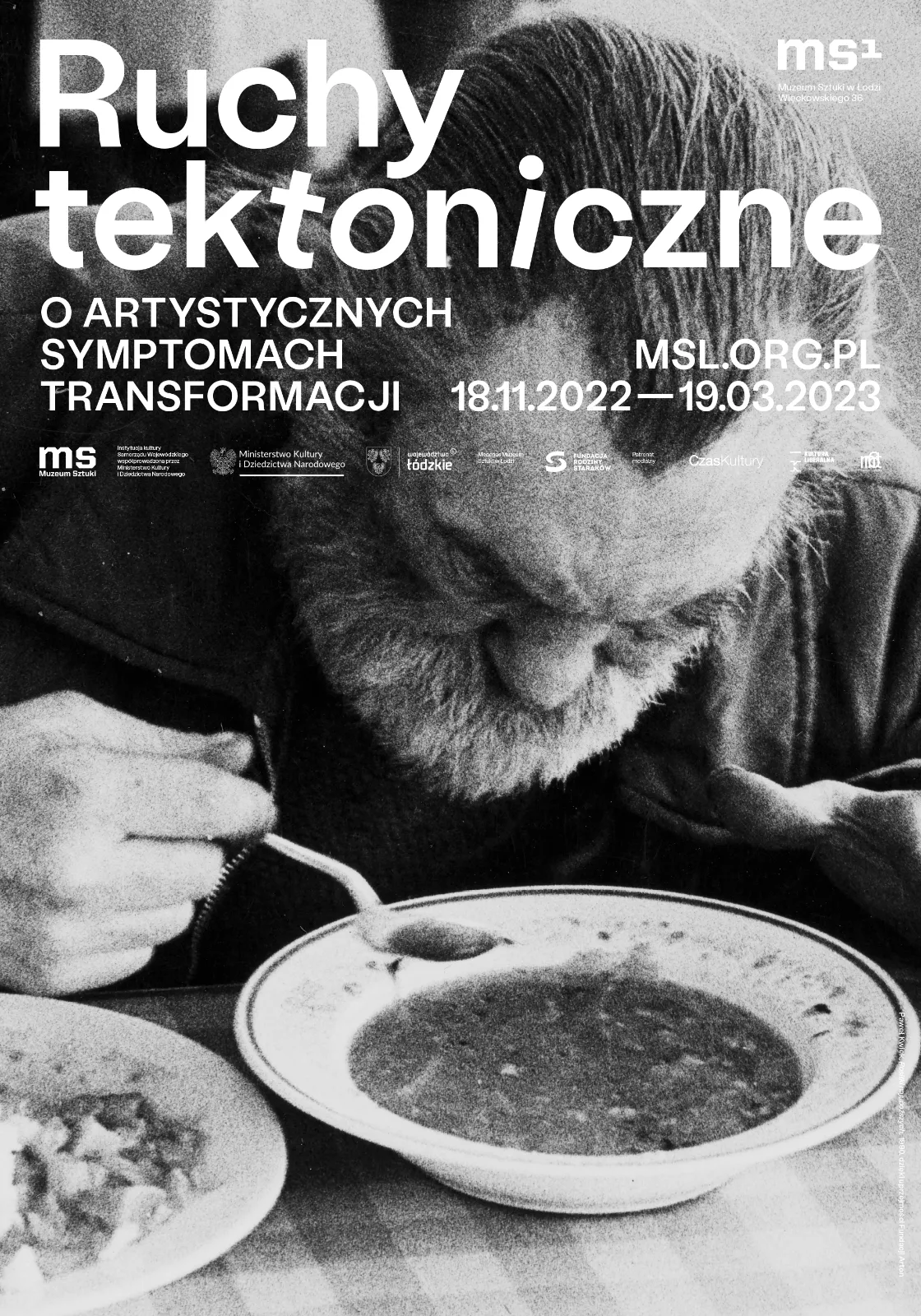
Exhibition poster featuring a black-and-white photograph of an elderly bearded man intently eating soup. White typography at the top reads: “Tectonic Movements. On the Artistic Symptoms of the Transition.”
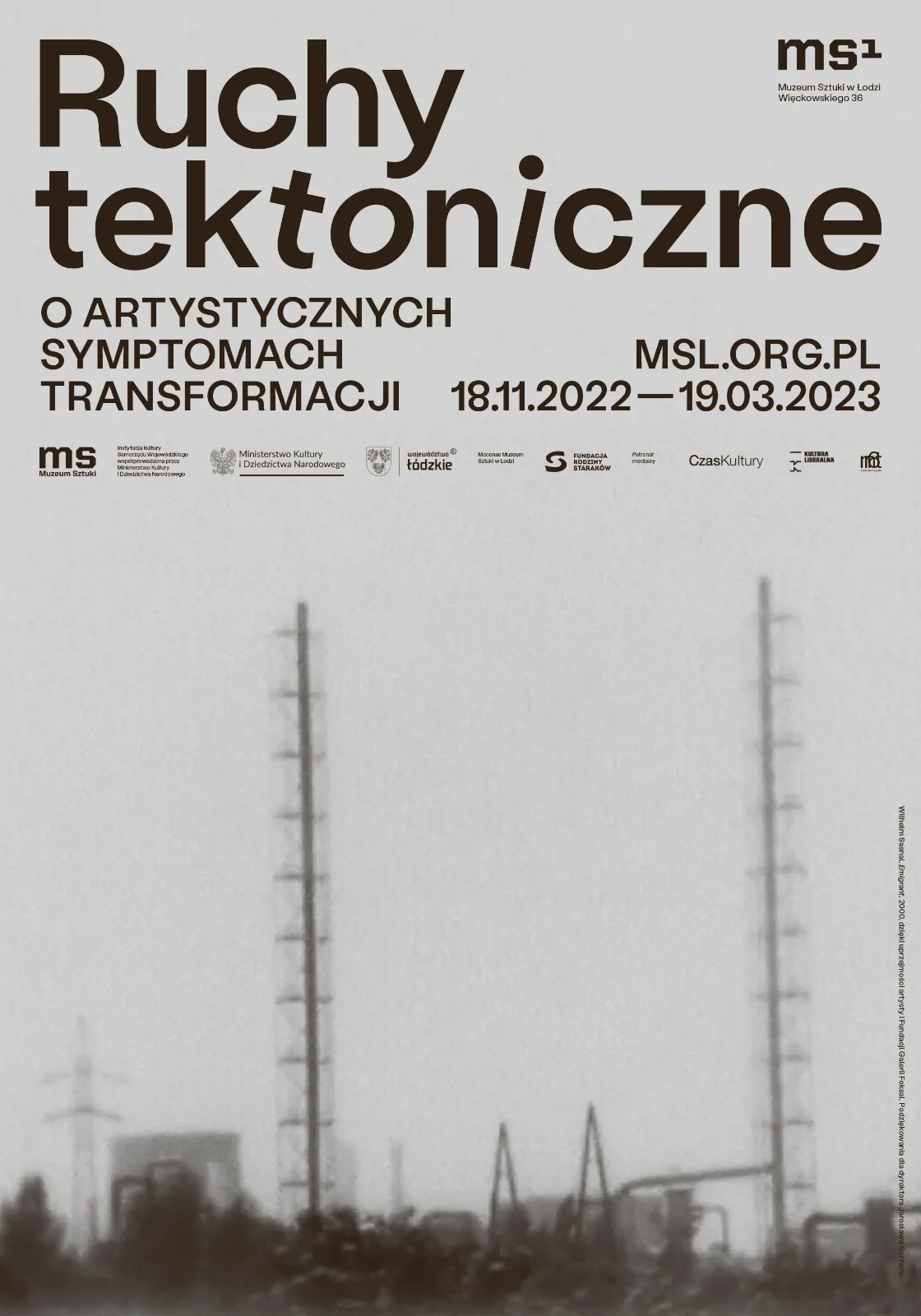
Exhibition poster with a blurred, gray photograph of an industrial landscape. Two tall, lattice transmission towers are in the foreground. Text is displayed in dark brown.
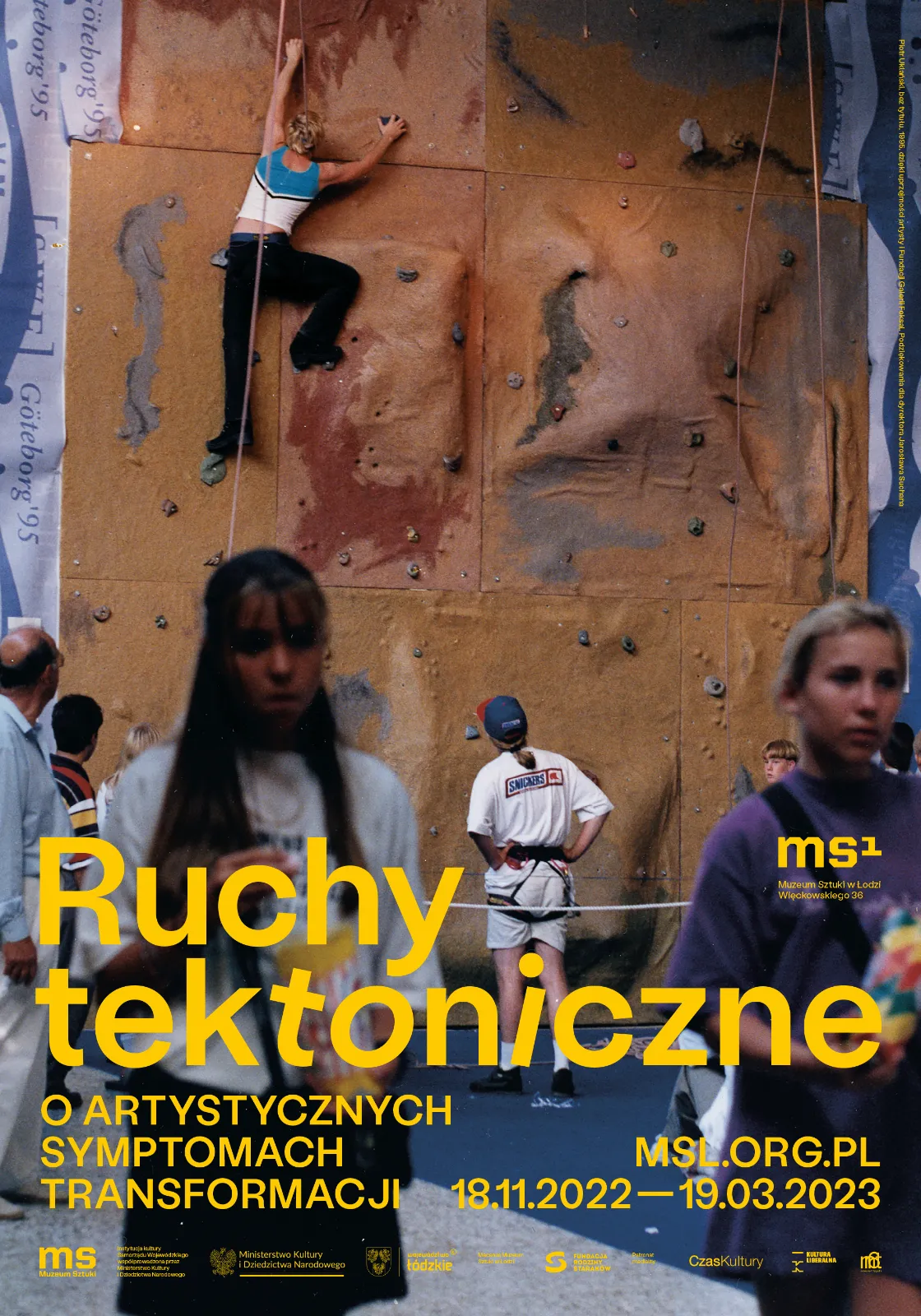
A colorful poster using a documentary photograph of a person climbing an artificial rock wall in an urban space. The exhibition title is overlaid in bright yellow font.

The posters are based on the most iconic artworks shown in the exhibition: Mariola Przyjemska’s Volcano, Paweł Kwiek’s Meals of the Poorest, a still from Wilhelm Sasnal’s video Emigrant, and an untitled work by Piotr Uklański.
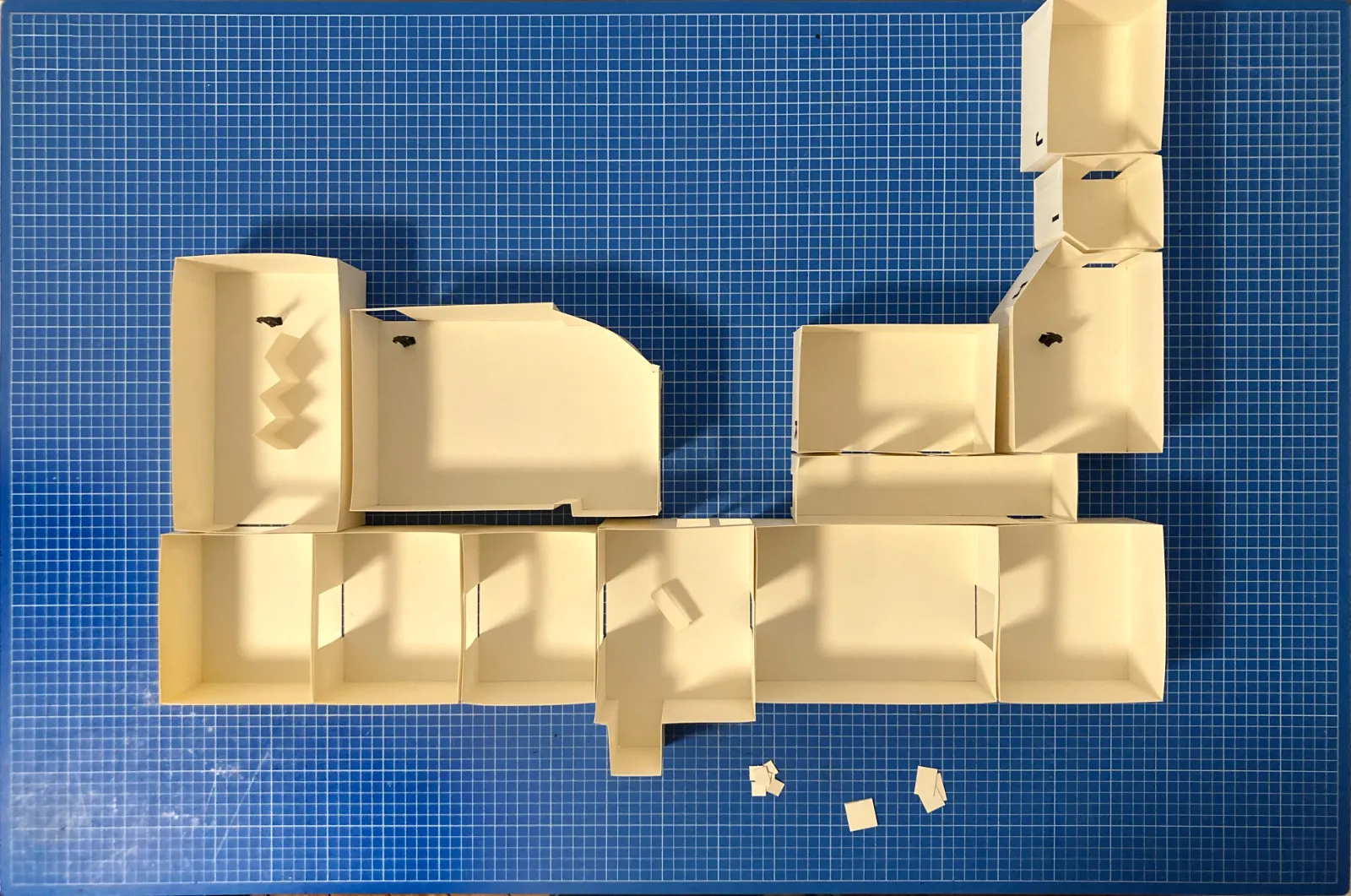
A top-down view (plan) of an architectural model of the exhibition. The white cardboard model of the gallery rooms is placed on a blue gridded cutting mat.

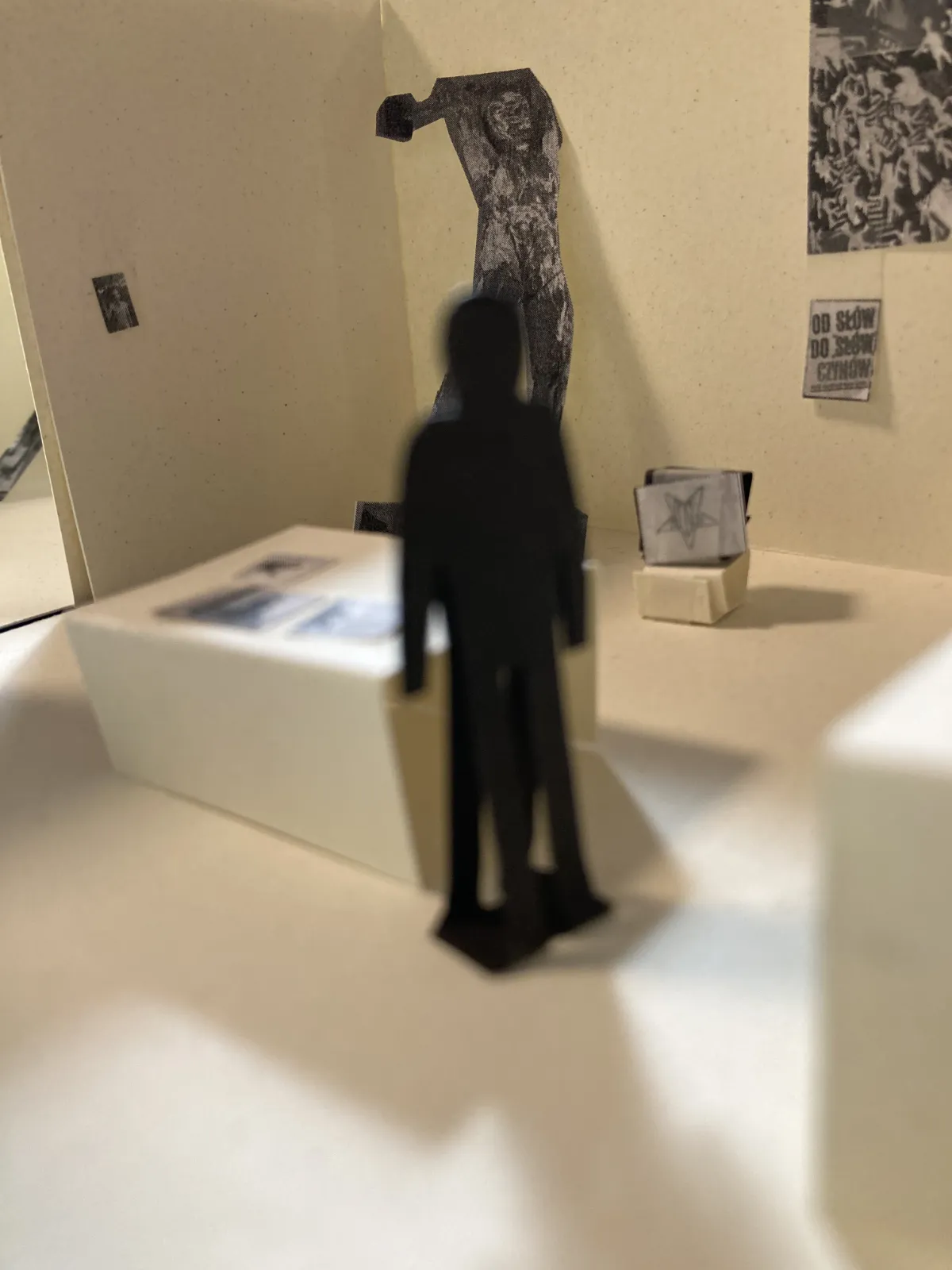
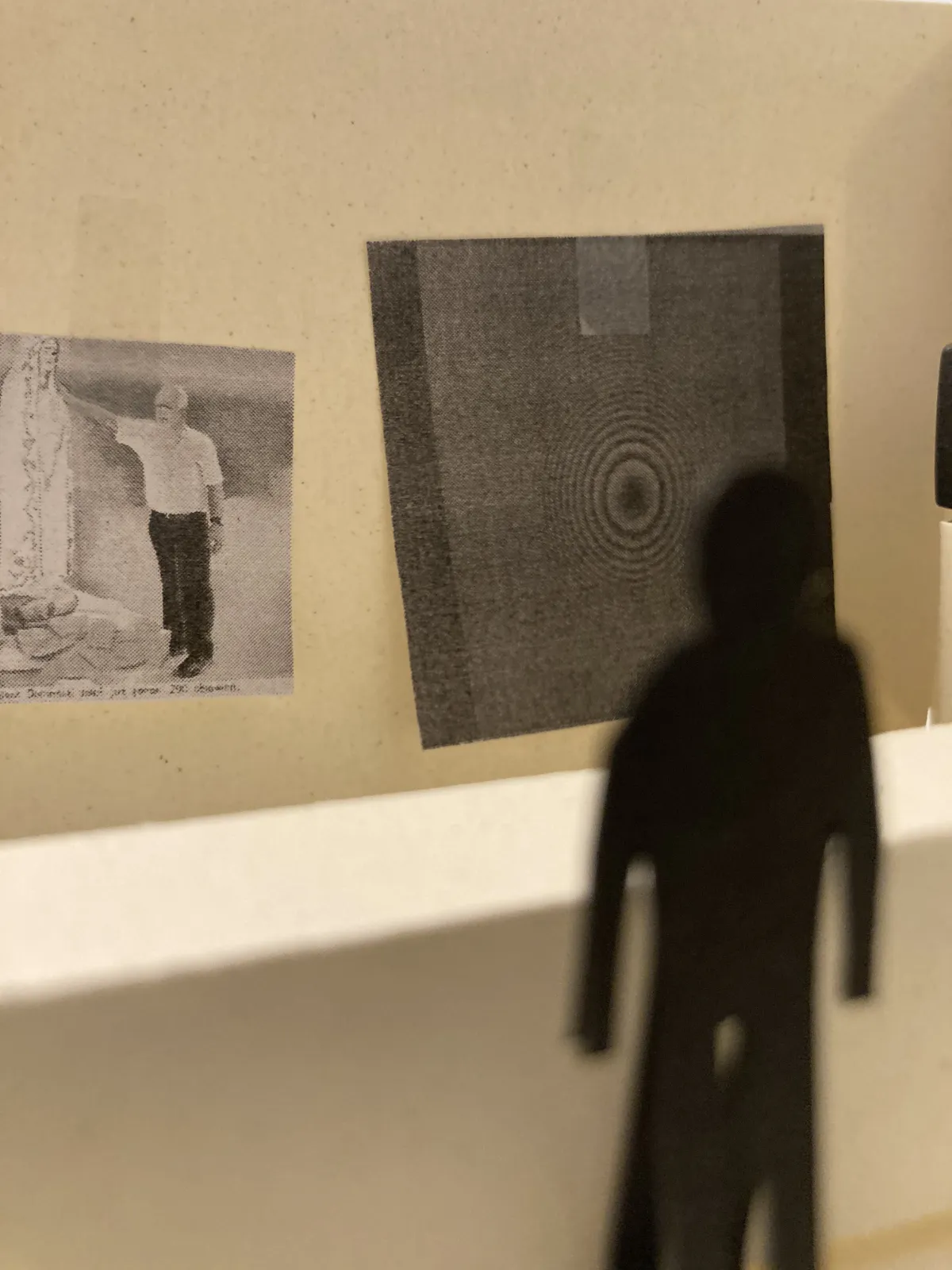
A key element of the design process was a 1:100 scale paper model, which served as the basis for preparing production wall layouts and floor plans. The physical mock-up allowed for effective testing of object placement within the rooms and provided an intuitive sense of scale. This solution proved helpful during working meetings and discussions with the curator.
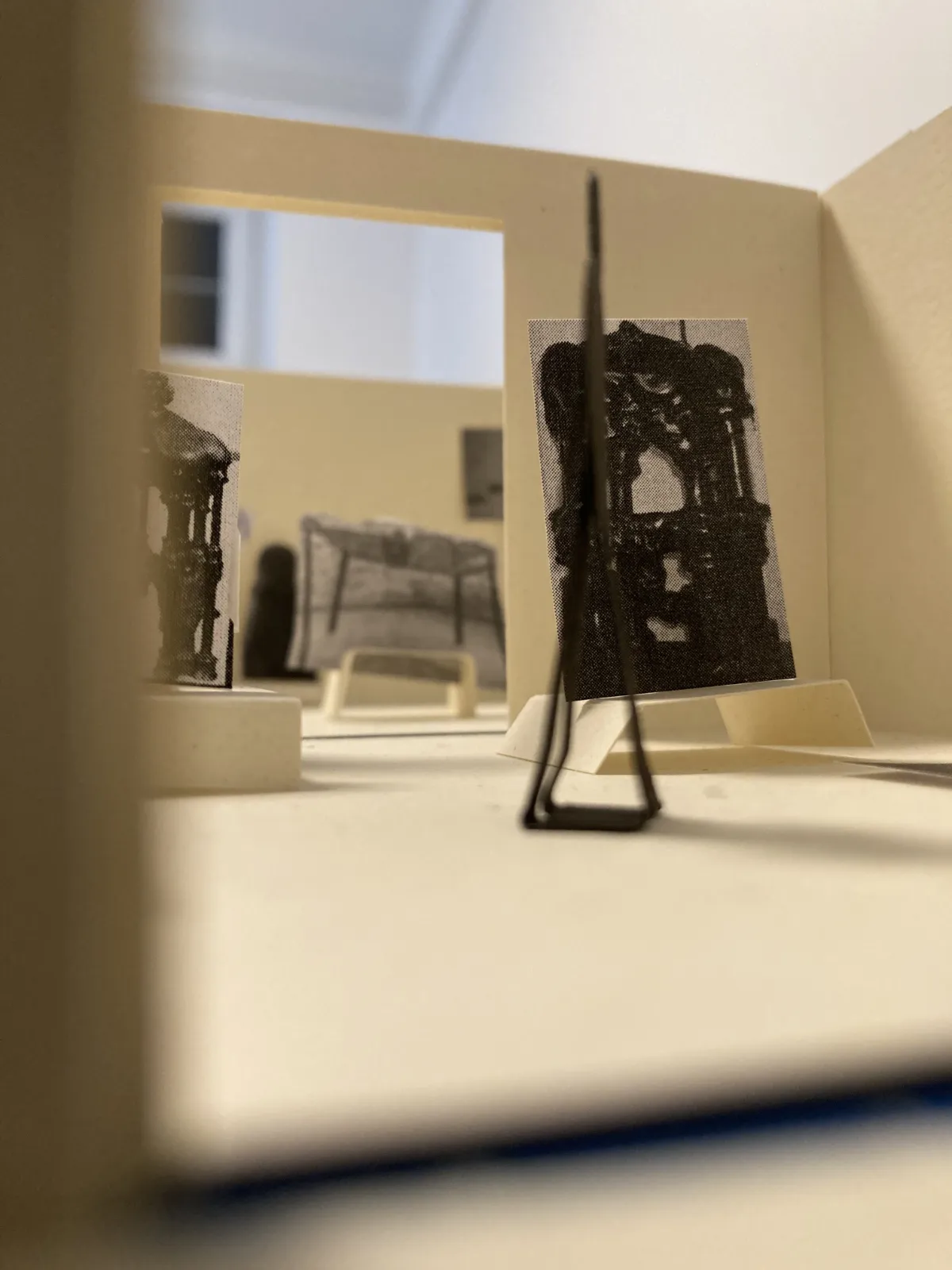
An interior view of the model taken from a low perspective. Miniature reproductions of artworks are visible on pedestals and walls, depicting the planned gallery layout.
A detail of the model: two small graphics are taped to a white wall—one featuring a figure and another with an abstract concentric circle motif. A black cardboard silhouette of a visitor stands in front of them.
A perspective view of the exhibition model. In the center, a black visitor silhouette is facing a tall, miniature sculpture of a male figure.
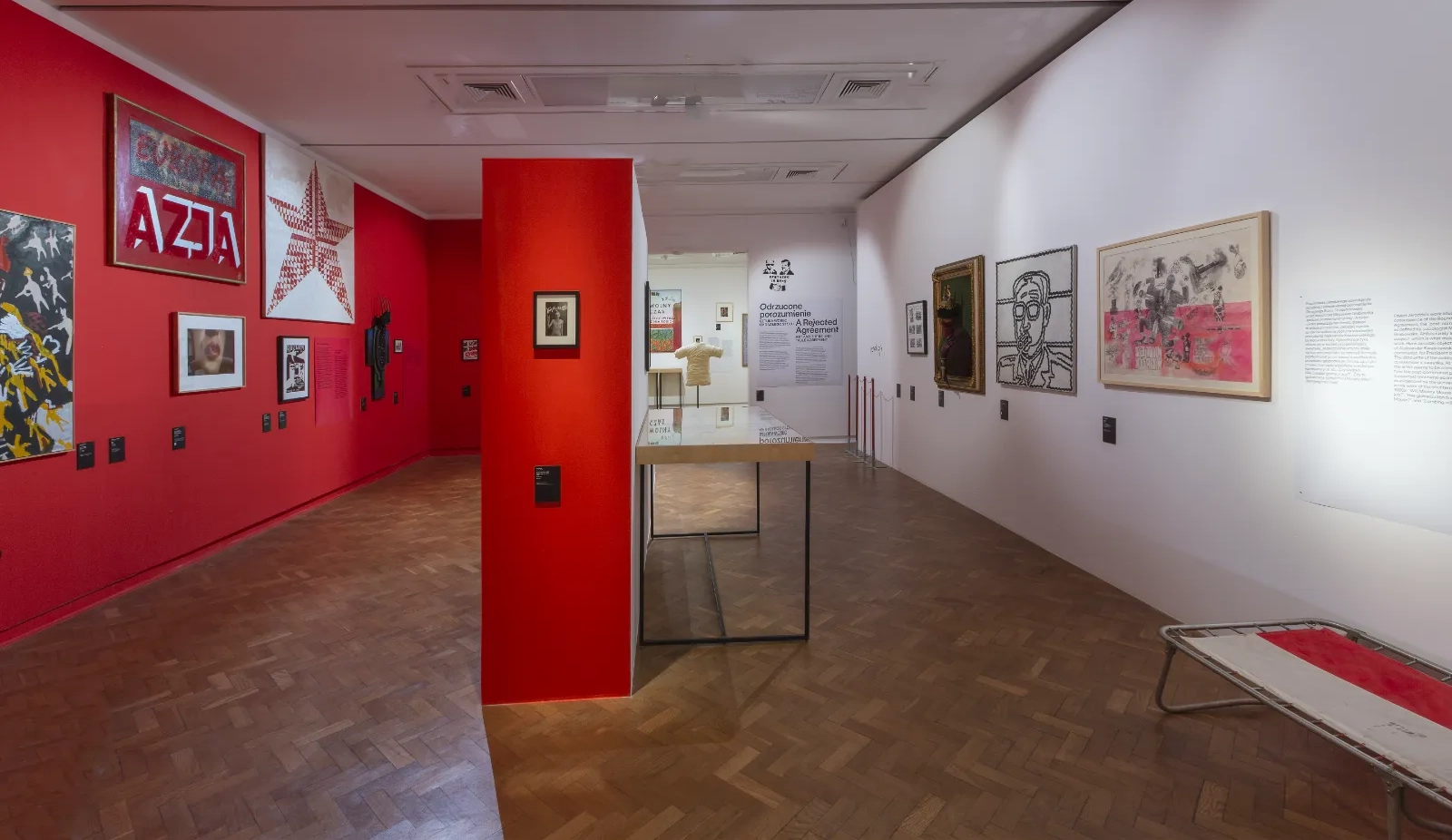
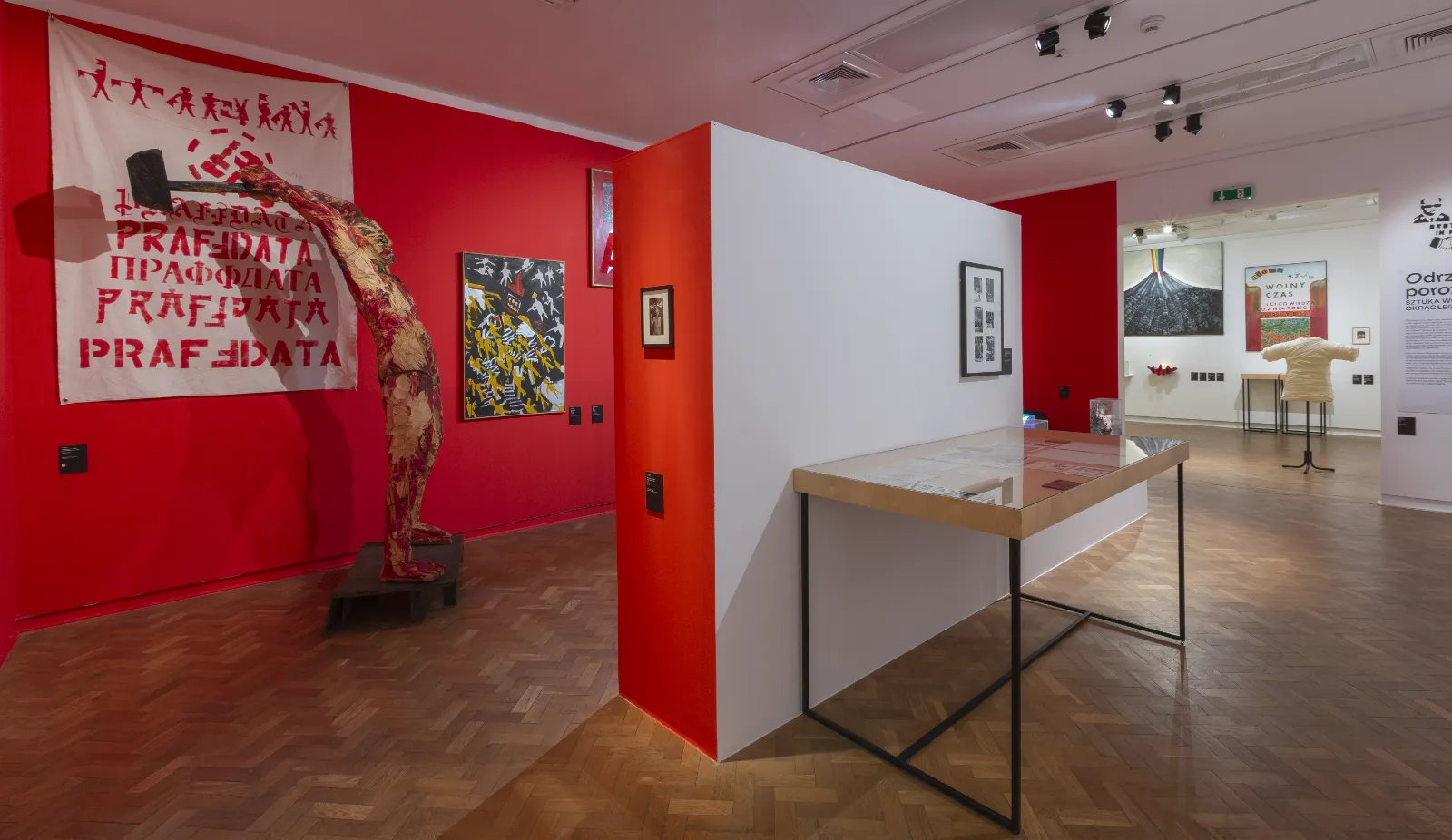
A wide shot of the exhibition hall. The left wall is vibrant red with hung paintings, while the right wall is white. A red pillar and a glass display case on a metal frame stand in the center.
A view of an exhibition fragment with a dominant red wall featuring a large white banner. Nearby stands a sculpture of a figure holding a hammer above its head.
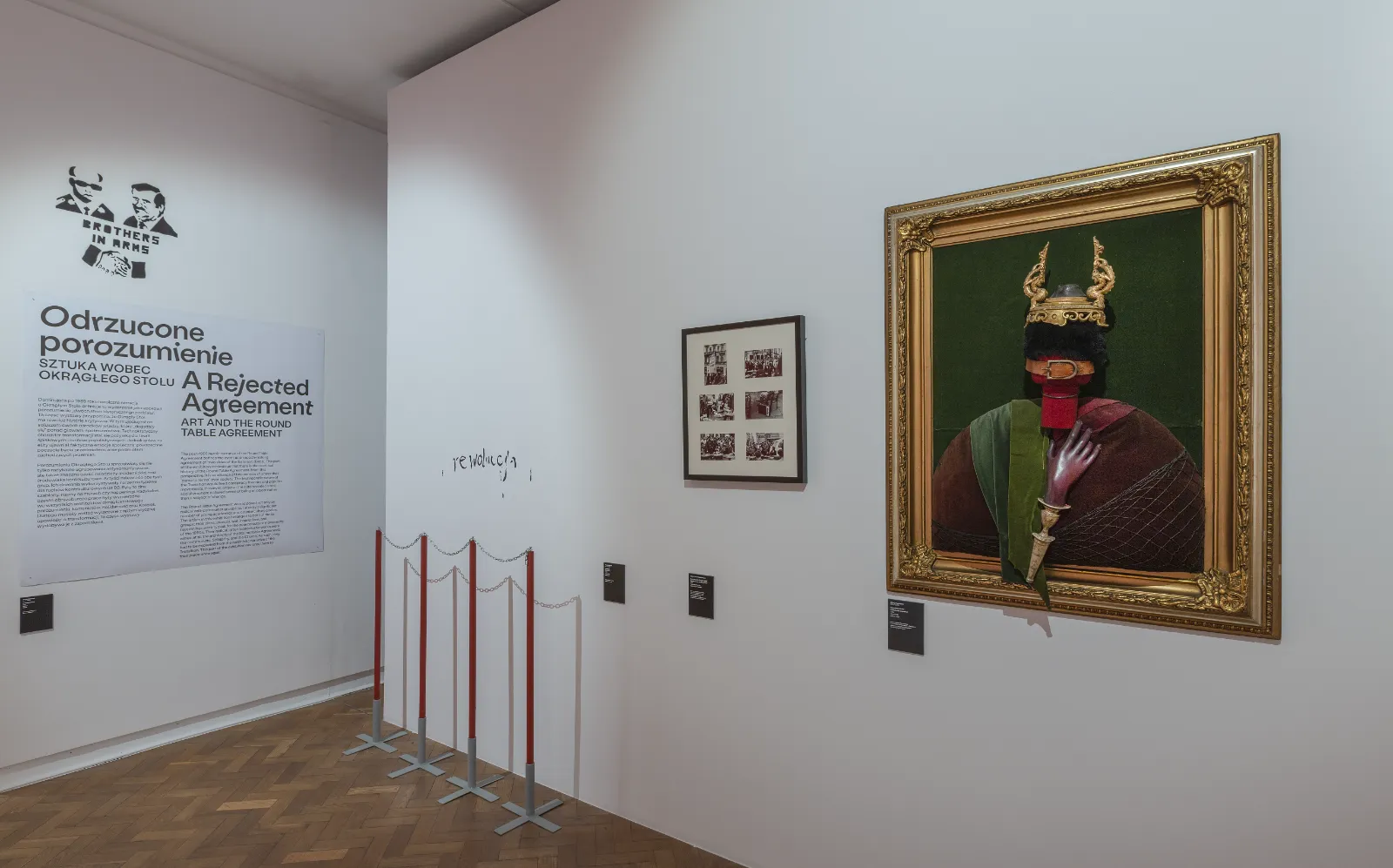
A white wall with the curatorial text “A Rejected Agreement.” Beside it hangs a portrait in an ornate gold frame depicting a figure with a masked face and horns.
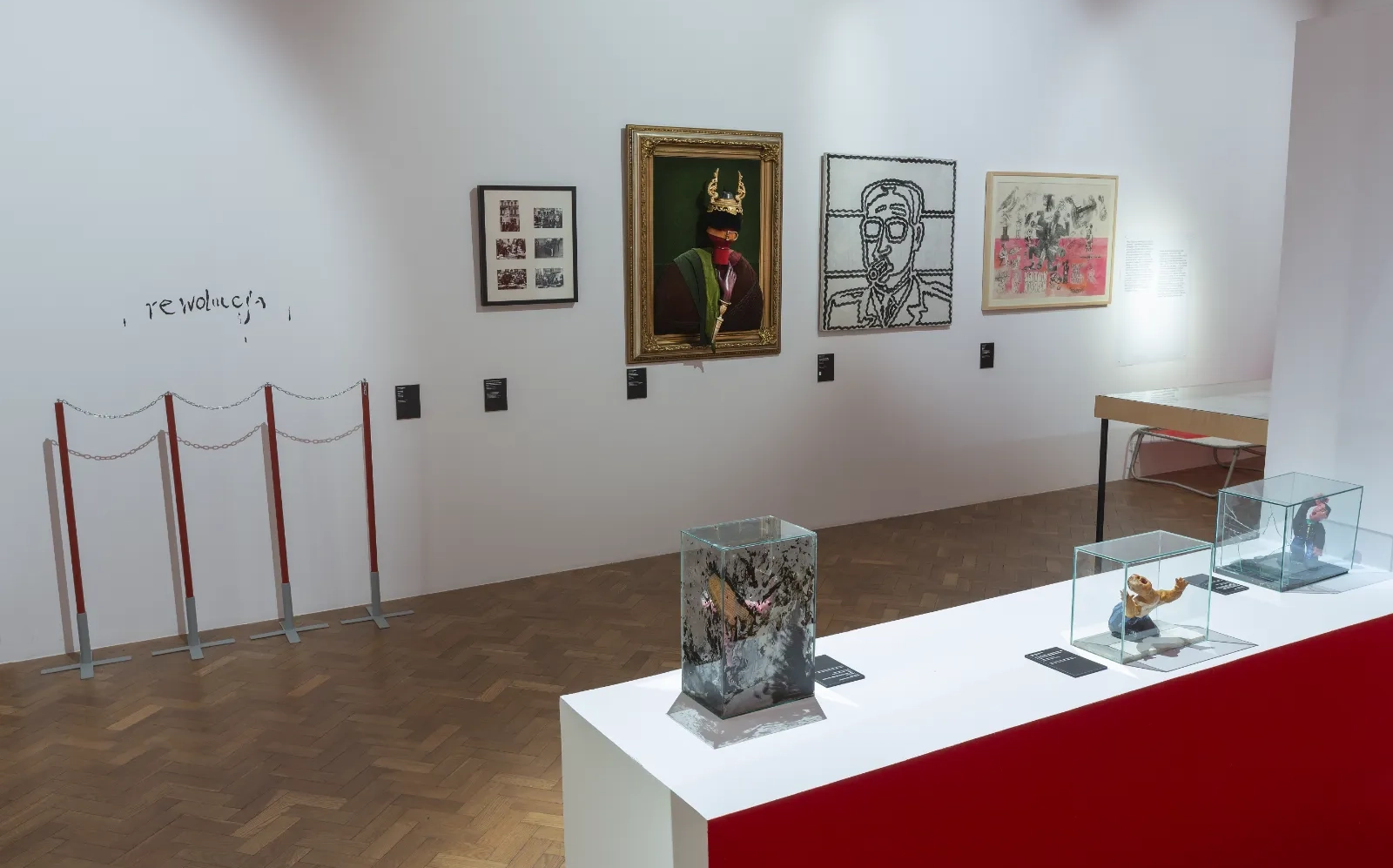
A shot of a gallery room with a row of works on the wall. In the foreground is a long white counter with glass display cases containing small, colorful figurative sculptures.
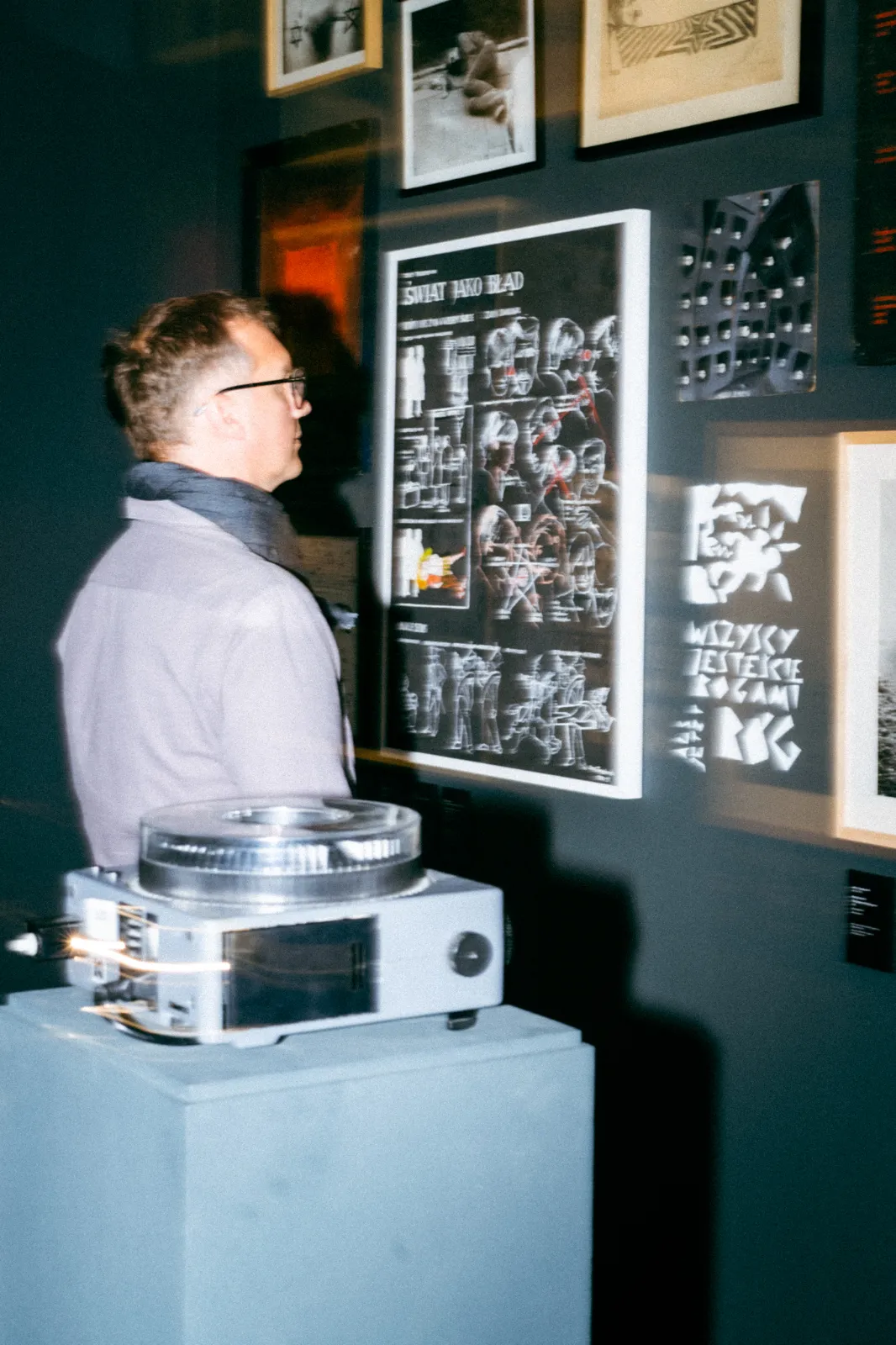
A man in glasses views a black board with graphics and text, including “The World as a Mistake.” A film projector sits on a gray pedestal in the foreground.
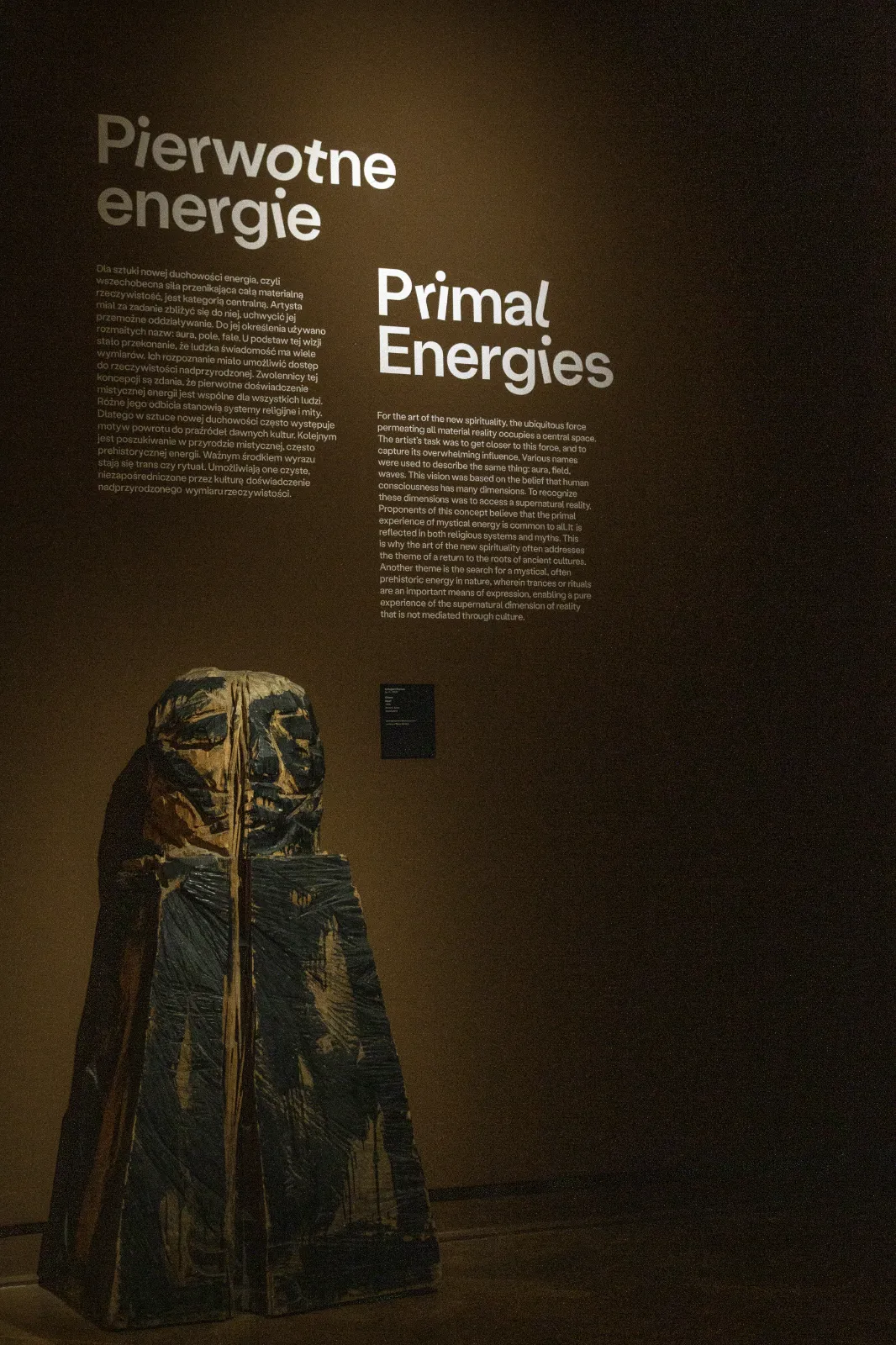
A dark room with illuminated wall text titled “Primal Energies.” Below stands a raw, vertical sculpture with a wood-like texture and an expressive painted face.

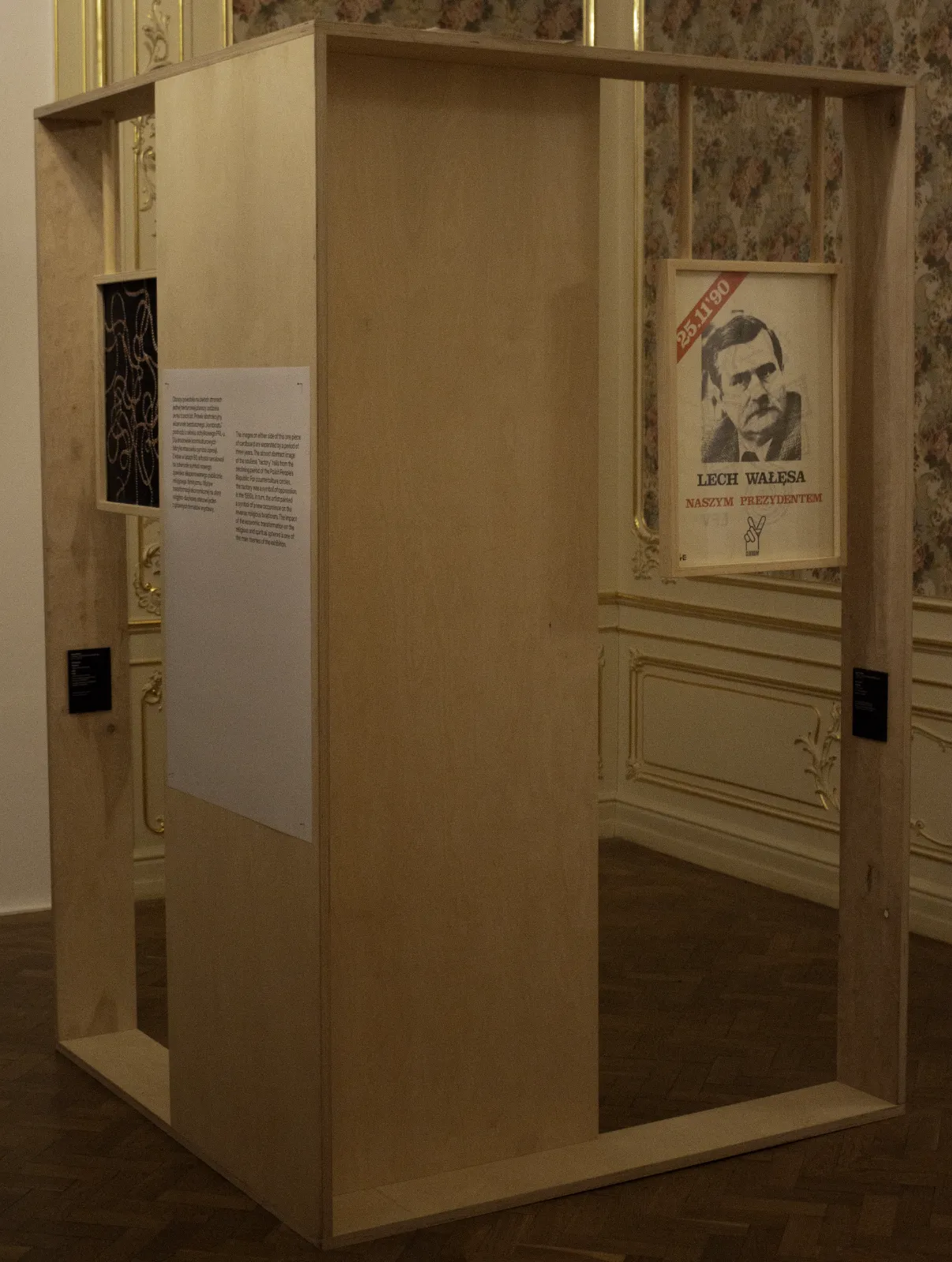
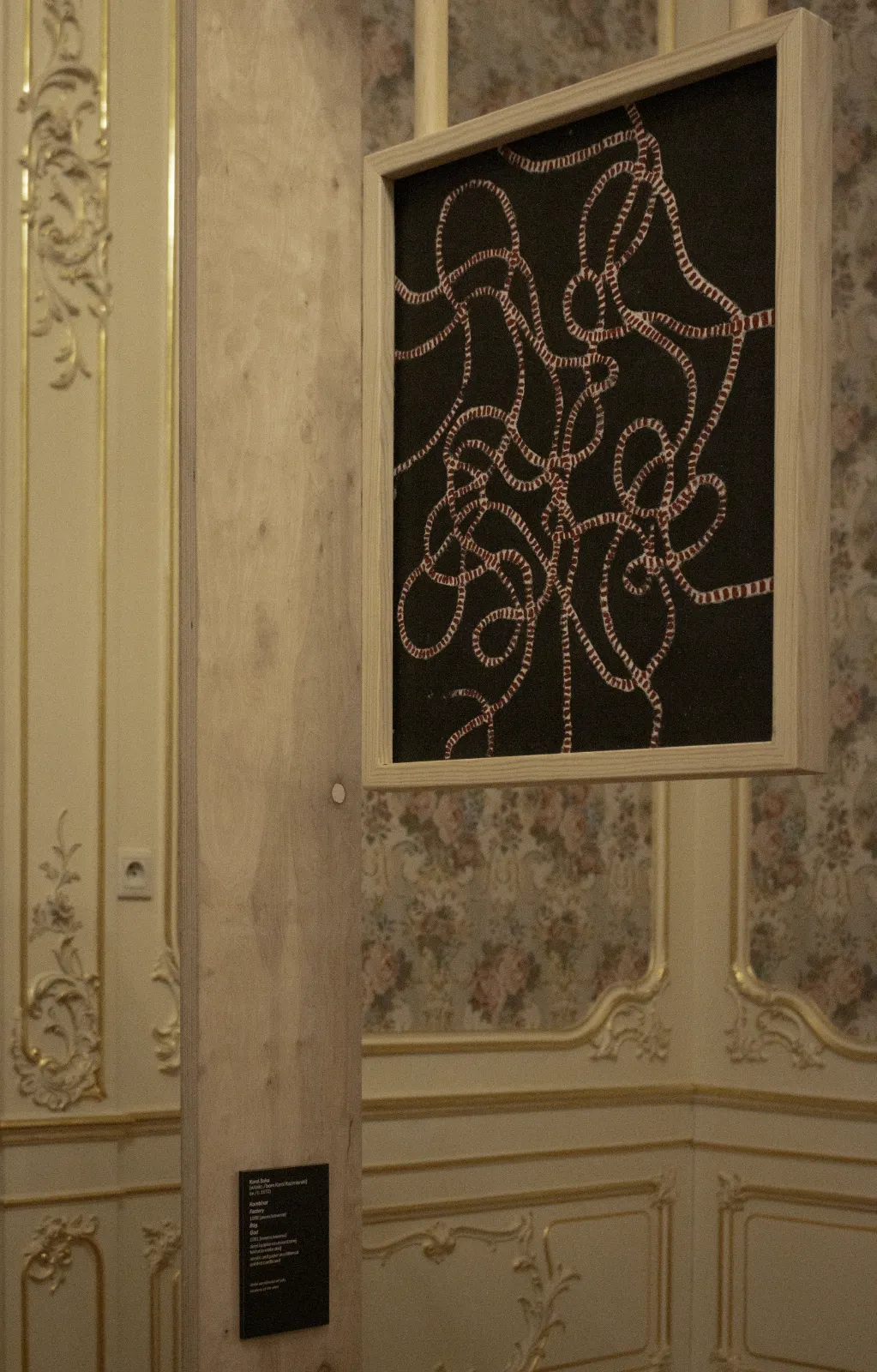
The exposition required the construction of special display elements in the decorative Mirror Hall. I applied a raw plywood structure that contrasted with the ornamental walls. I placed two double-sided frames within it, which were used to display Egon Fietke’s graphic design printed on the reverse of an election poster and a two-sided painting by Karol Suka.
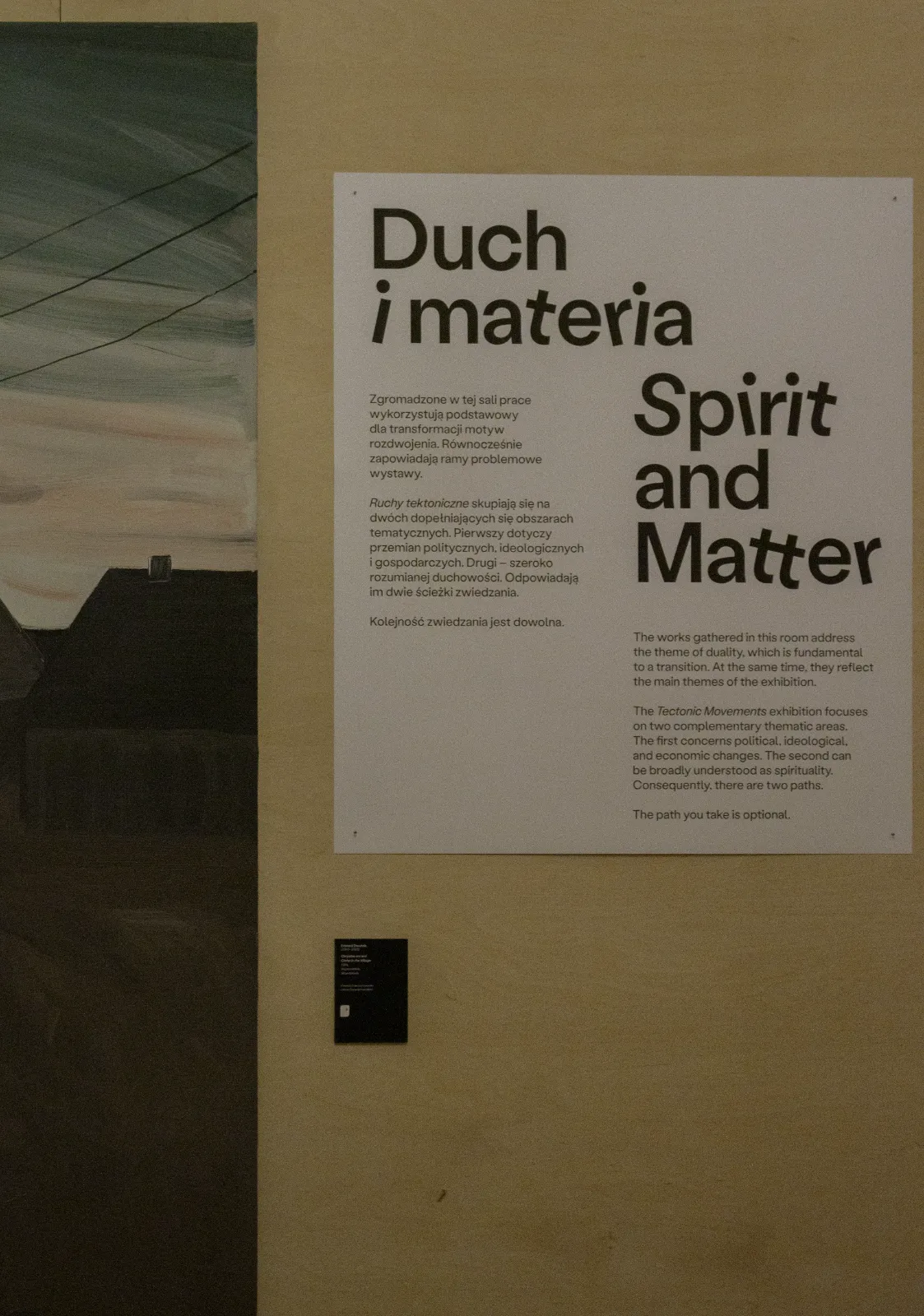
A close-up of an information board titled “Spirit and Matter.” To the left, a fragment of a painting showing a dark landscape of rooftops is visible.
A painting in a light wooden frame hung in a lavishly decorated palace room with gold accents. The artwork depicts white, winding lines on a black background.
A wooden cube-shaped skeletal structure standing in a room with patterned wallpaper. An election poster of Lech Wałęsa from 1990 is hung inside the structure.

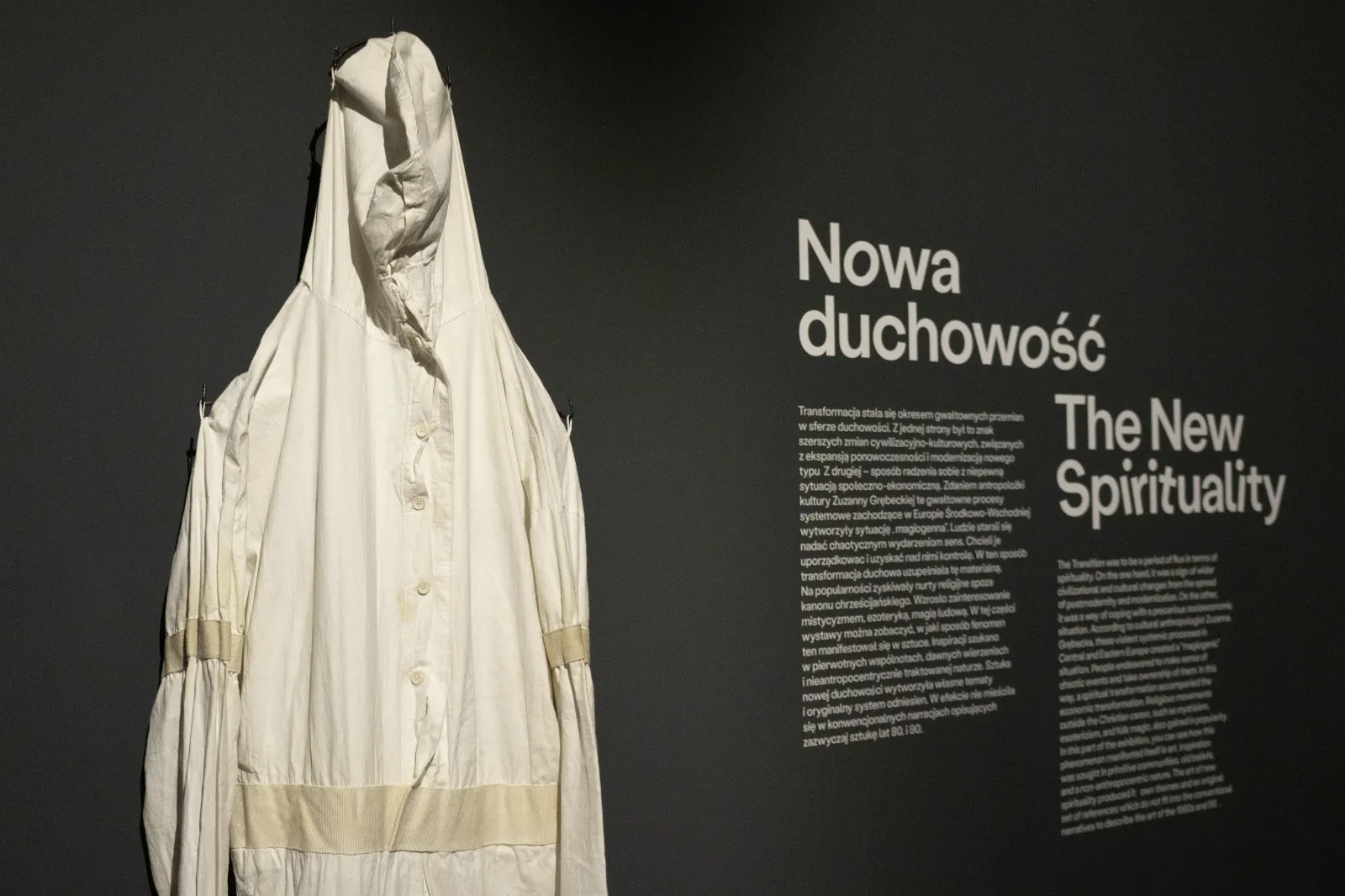
A white hooded jumpsuit hung on a dark gray wall. Beside it is white text with the section title: “The New Spirituality.”

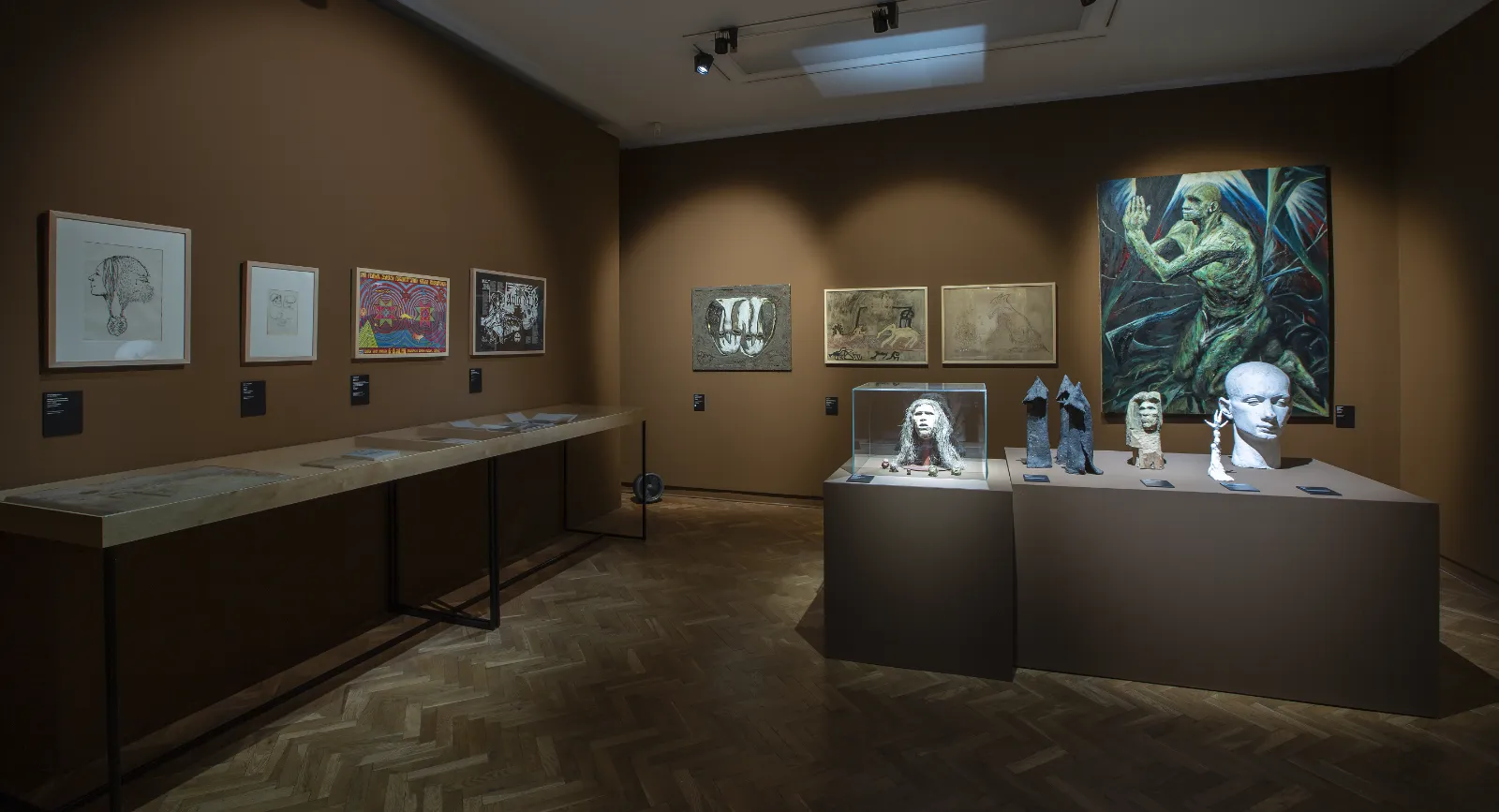
A view of a room with brown walls. Head sculptures sit on pedestals, and a large painting on the right wall depicts a dynamic, greenish figure in a prayer-like pose.

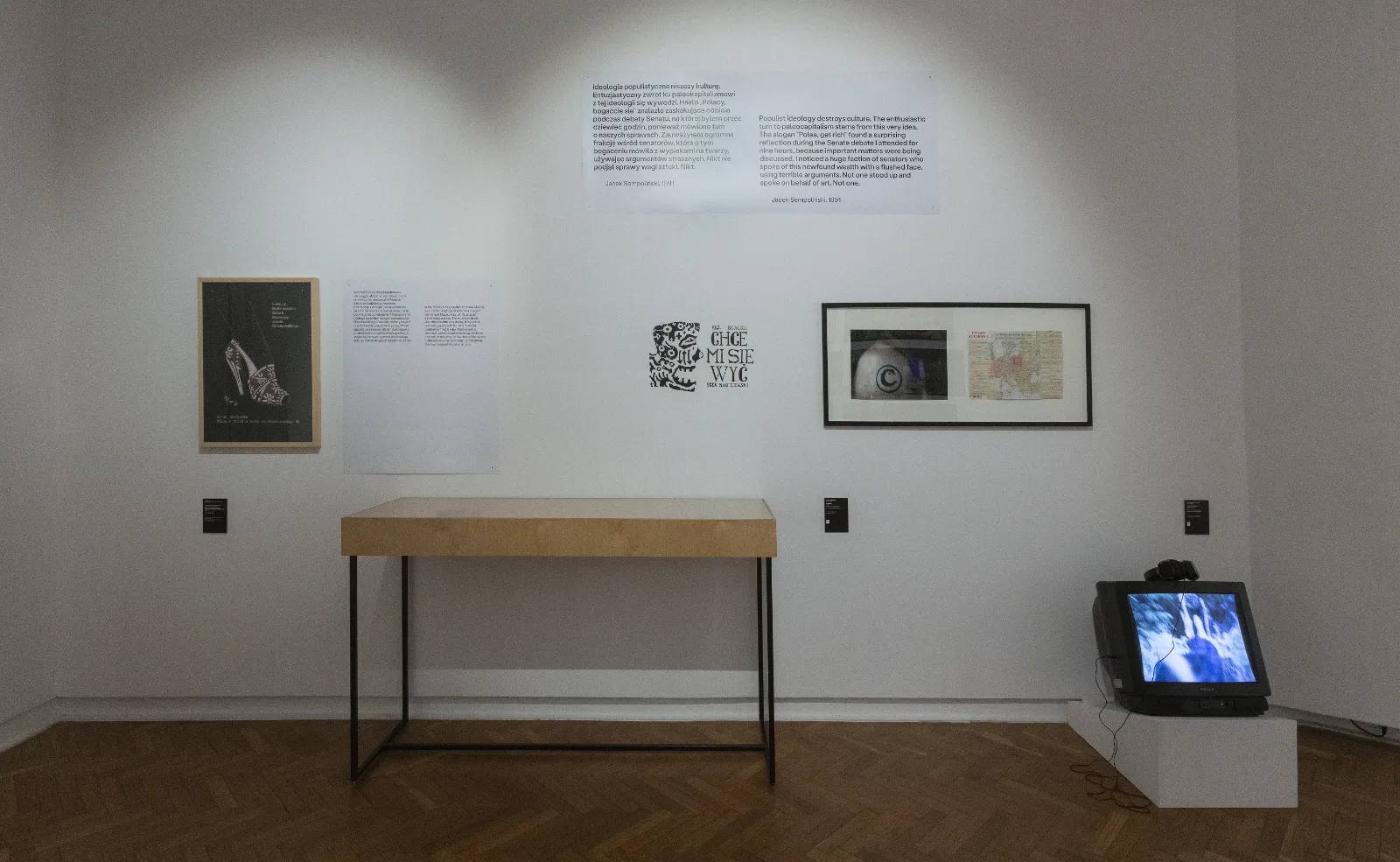
A white wall with texts and graphics. A simple wooden table stands against the wall, and on the floor to the right, an old CRT television displays a bluish image.

The colour scheme of the section devoted to spirituality featured dark shades of grey, yellow and earthy tones, while the political and economic topics were distinguished by white, red, and light gray.
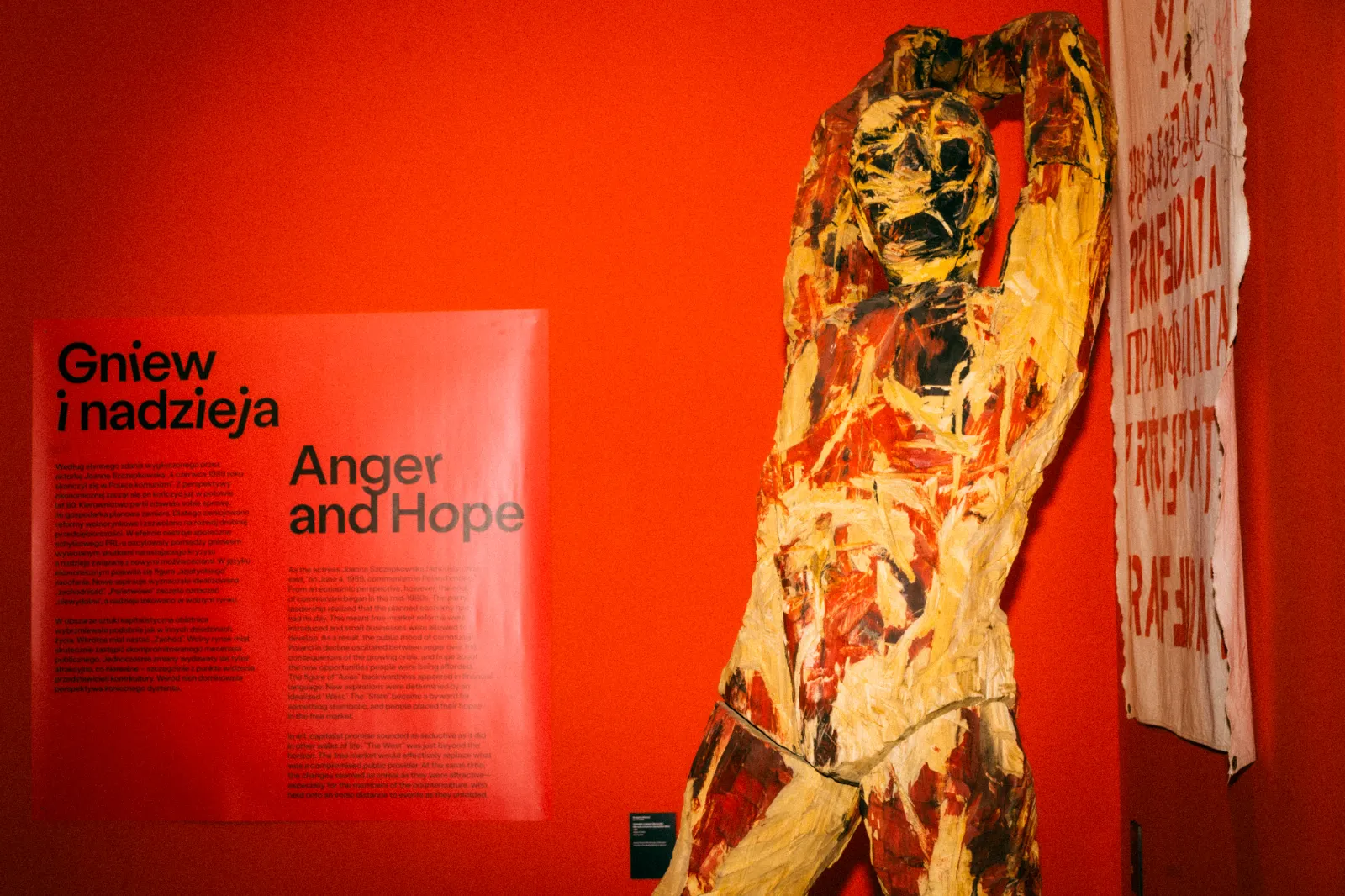
An expressive yellow and red sculpture of a figure with arms raised above its head, standing against a red wall with the text “Anger and Hope.”
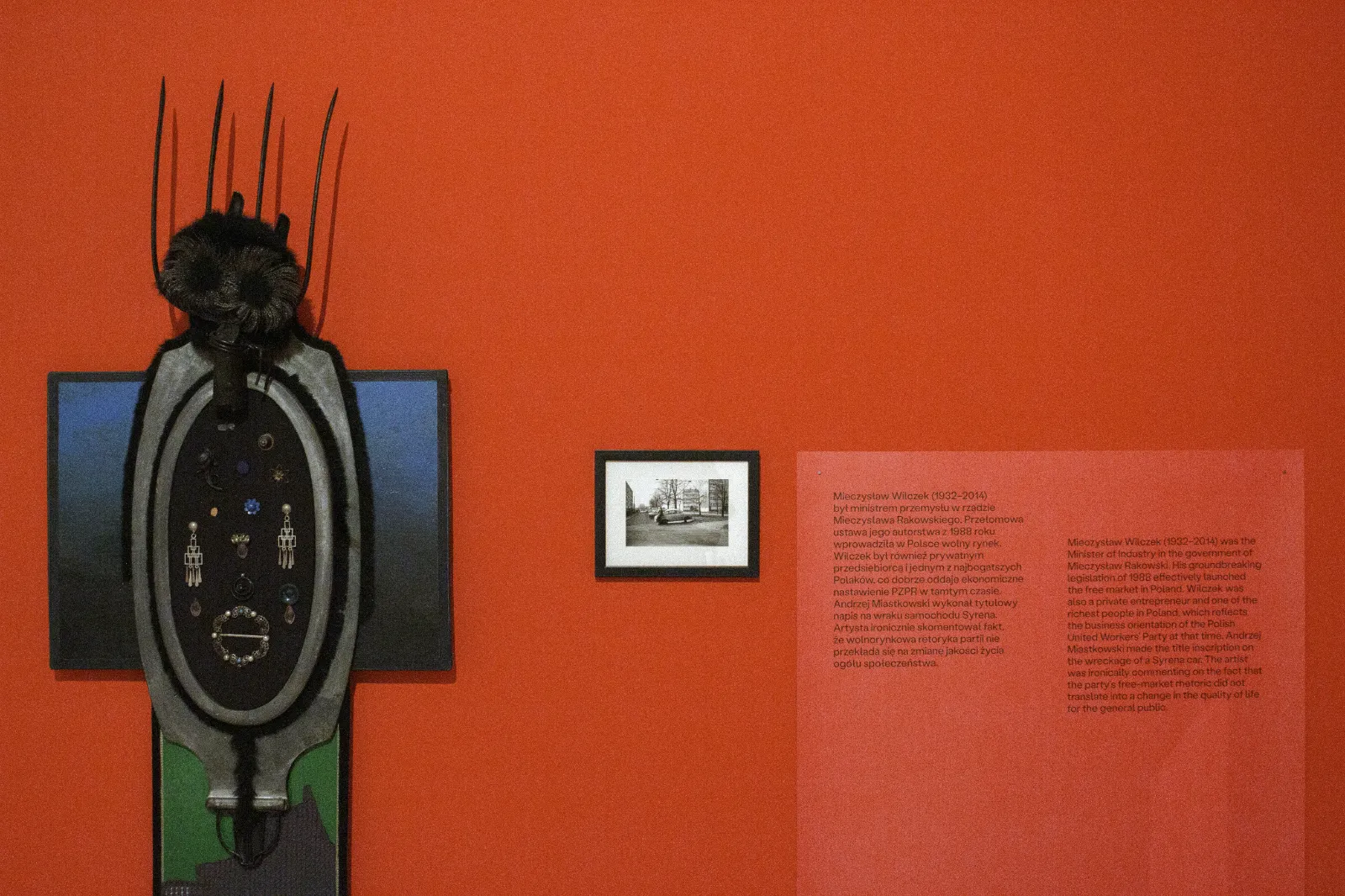
A detail of a red wall with text about Mieczysław Wilczek. To the left hangs an assemblage resembling a mask or totem, decorated with small objects and jewelry.
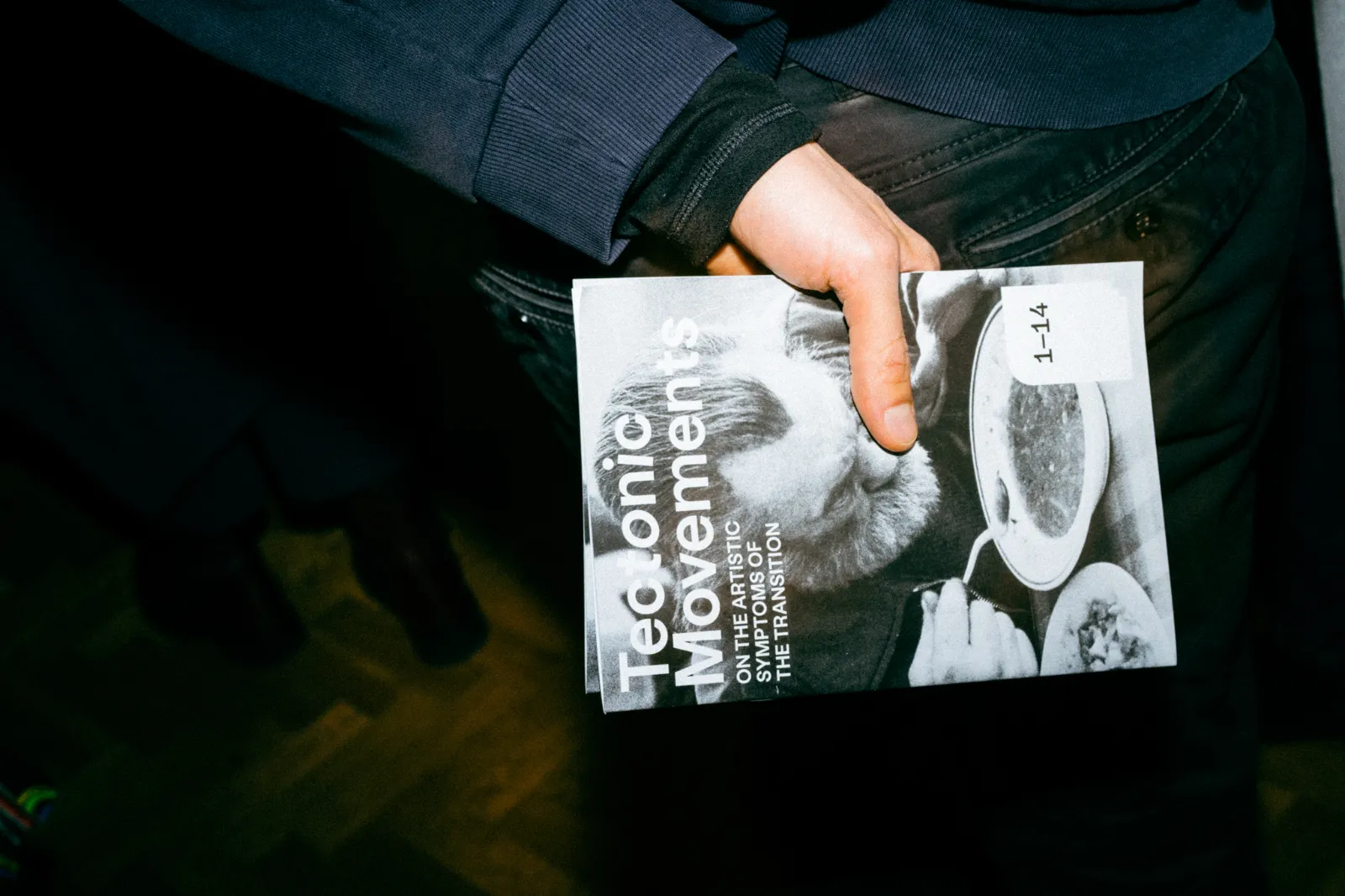
A close-up of a person’s hand holding the exhibition brochure “Tectonic Movements.” The cover features the image of the man eating soup.
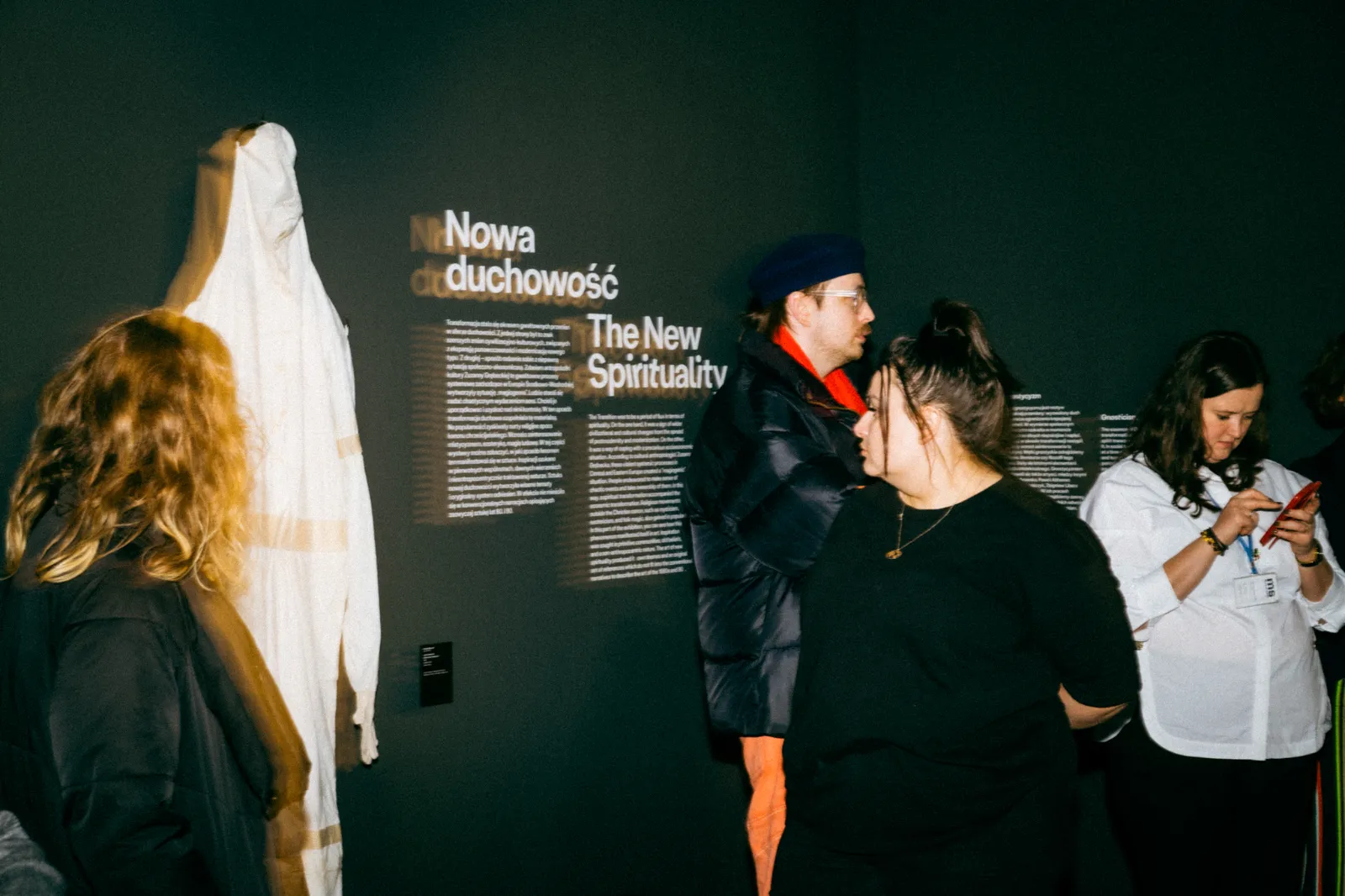
A group of visitors viewing the exhibition in “The New Spirituality” section. A white robe and curatorial texts are visible on the dark wall in the background.
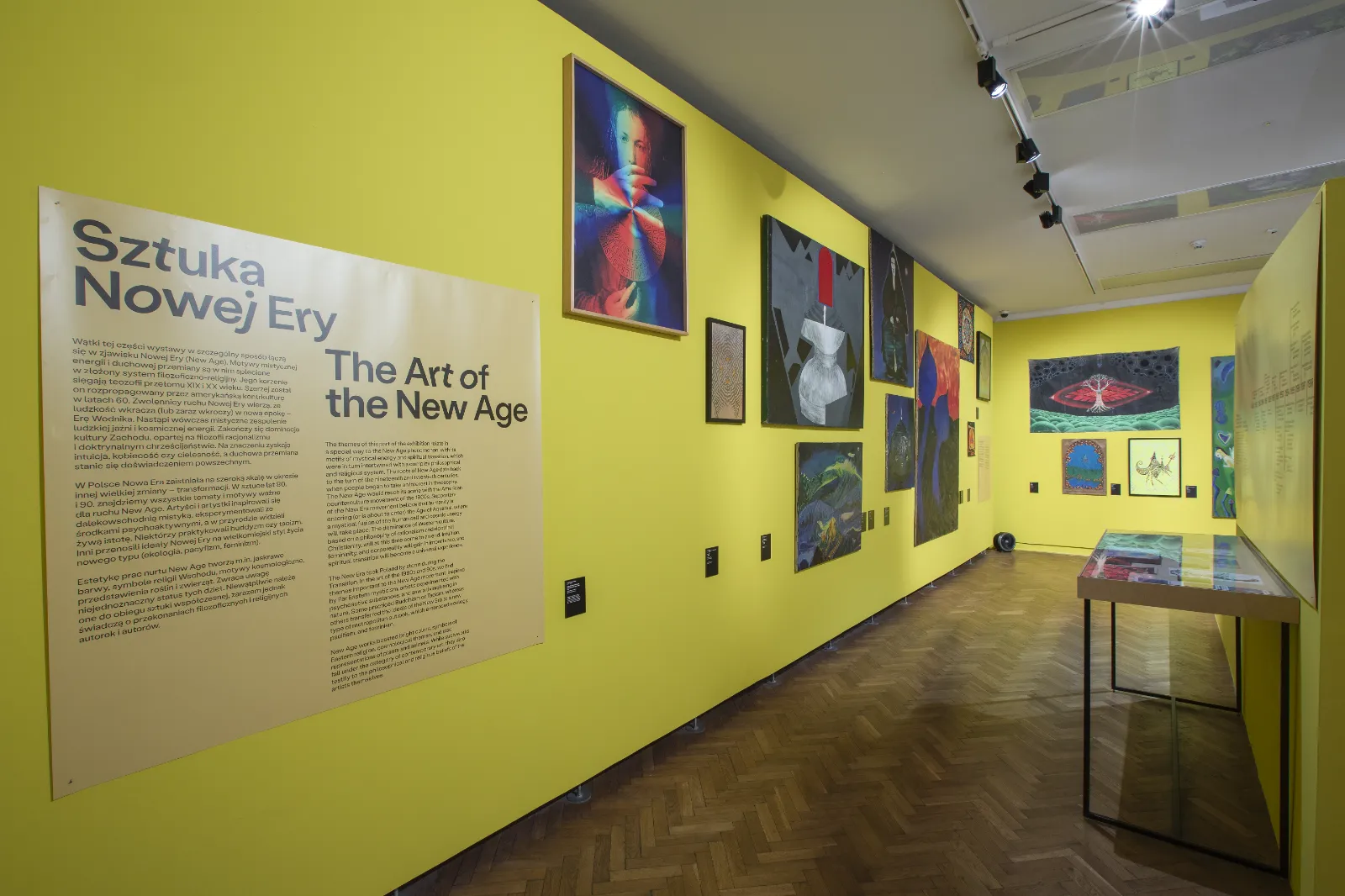
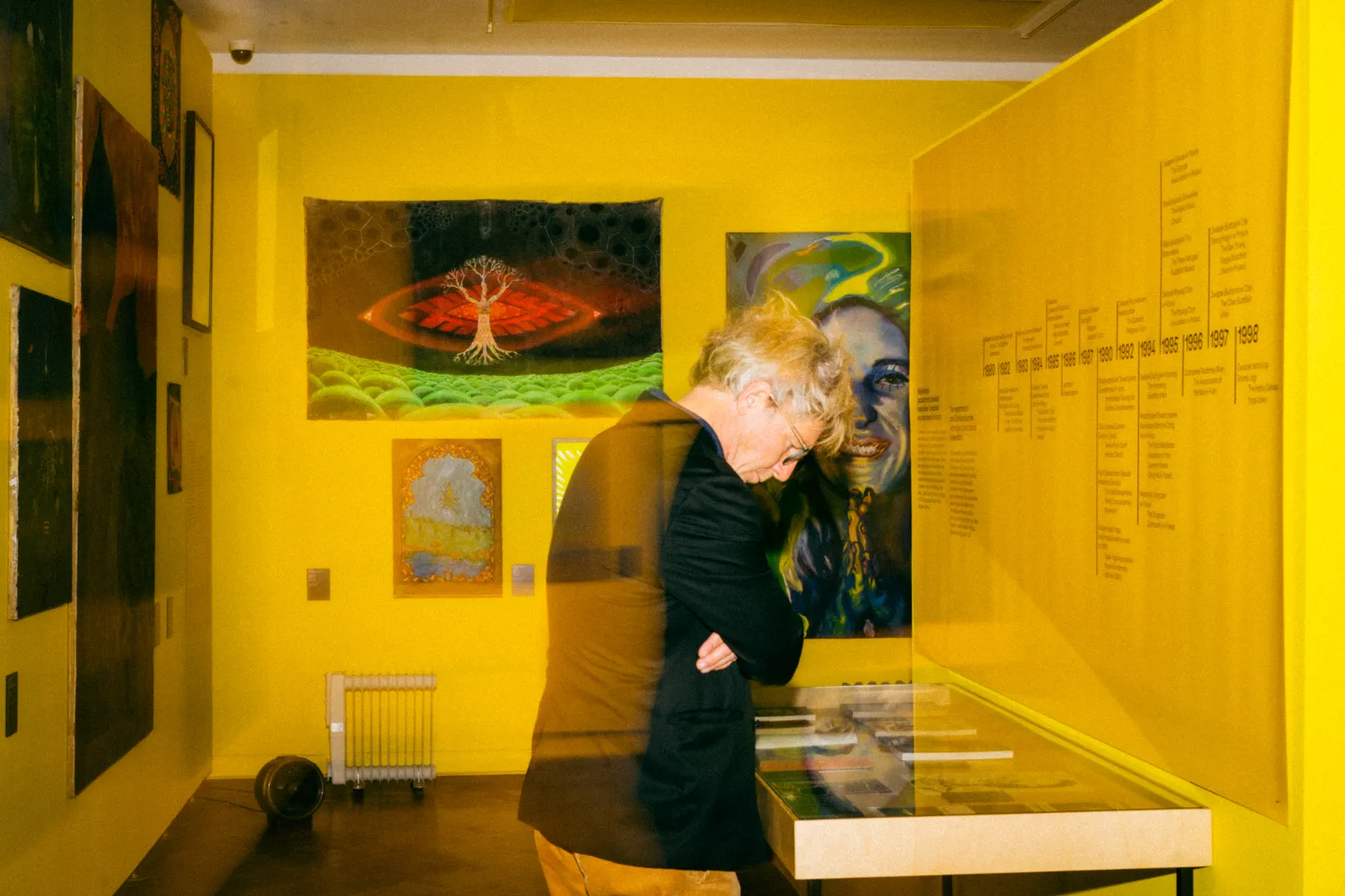
A long, bright yellow wall titled “The Art of the New Age.” It is hung with numerous colorful paintings featuring esoteric and mystical themes.
A man leans over a glass display case in a room with yellow walls. In the background, colorful paintings and a timeline of the transition are visible.

Apart from works of art—paintings, drawings, sculptures, installations, and videos—archival materials and documents of social life were also presented. The processes and transformations of the transition period were analysed using diagrams and timelines. The infographic layer of the show allows complex interdependencies to be to presented visually.
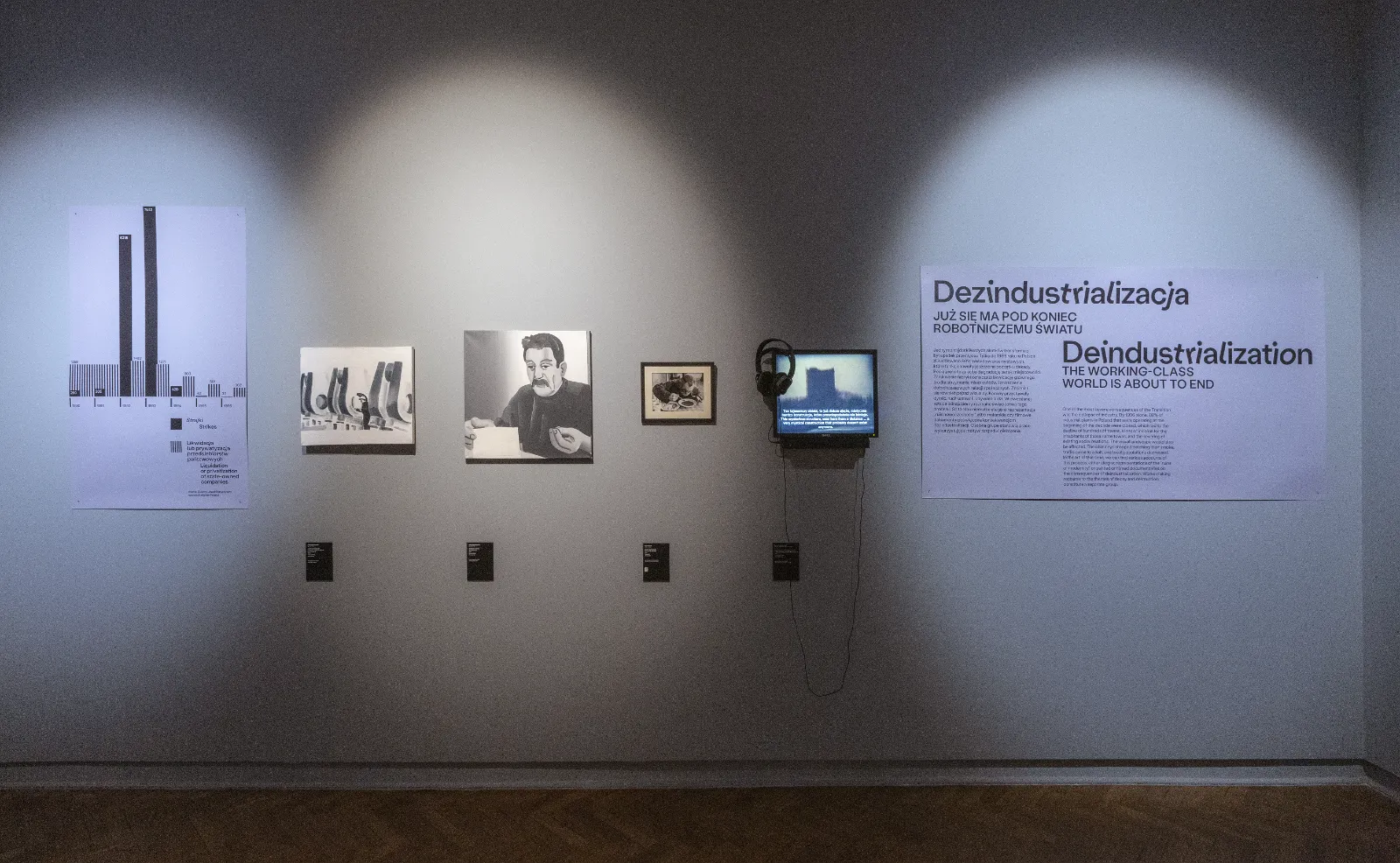
A gray wall with the “Deindustrialization” section. It features a bar graph, small paintings, and a monitor playing a film.
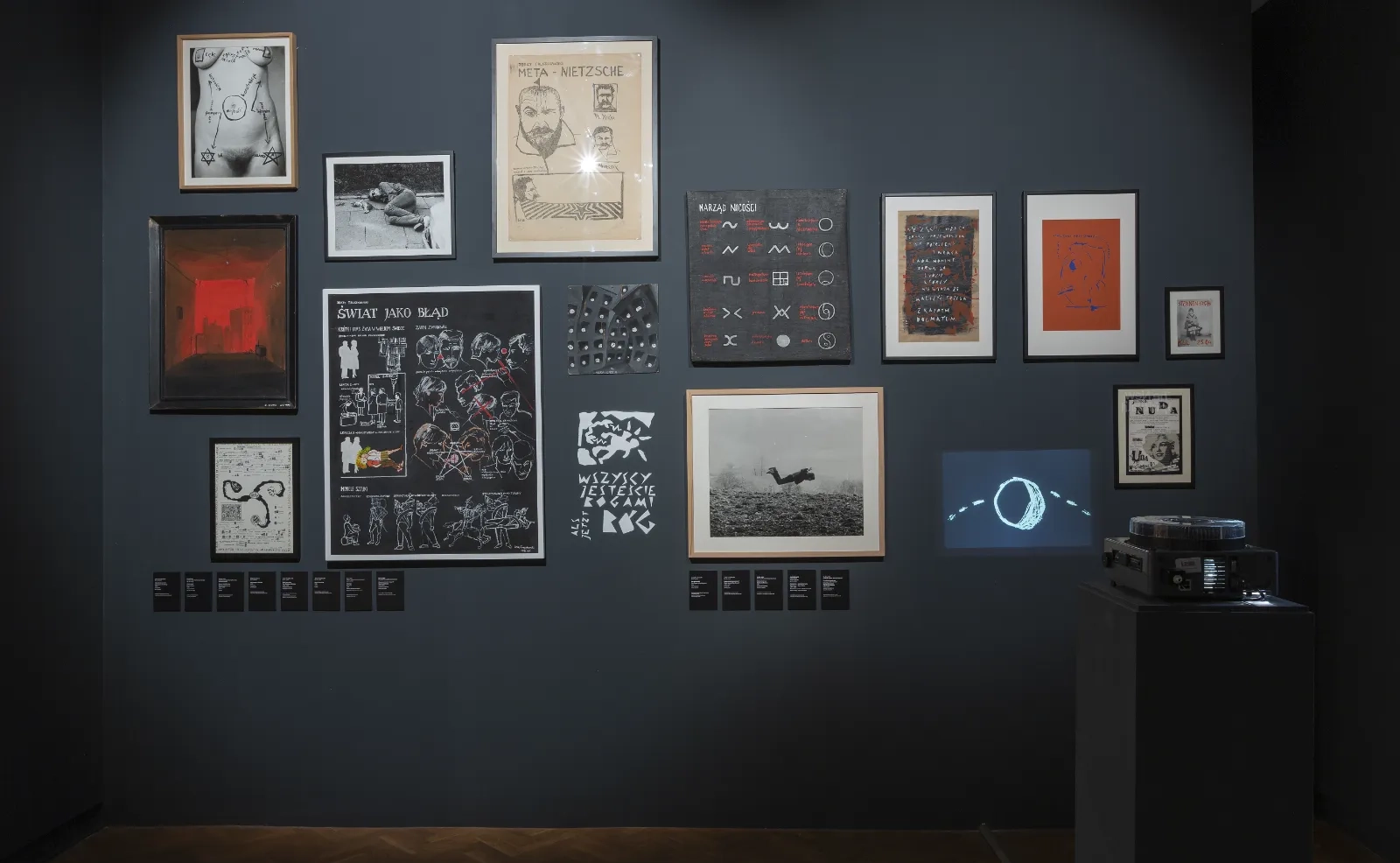
A dark wall densely filled with various works: graphics, photographs, and a drawing with the text “Meta-Nietzsche.” A projector sits on a pedestal nearby.
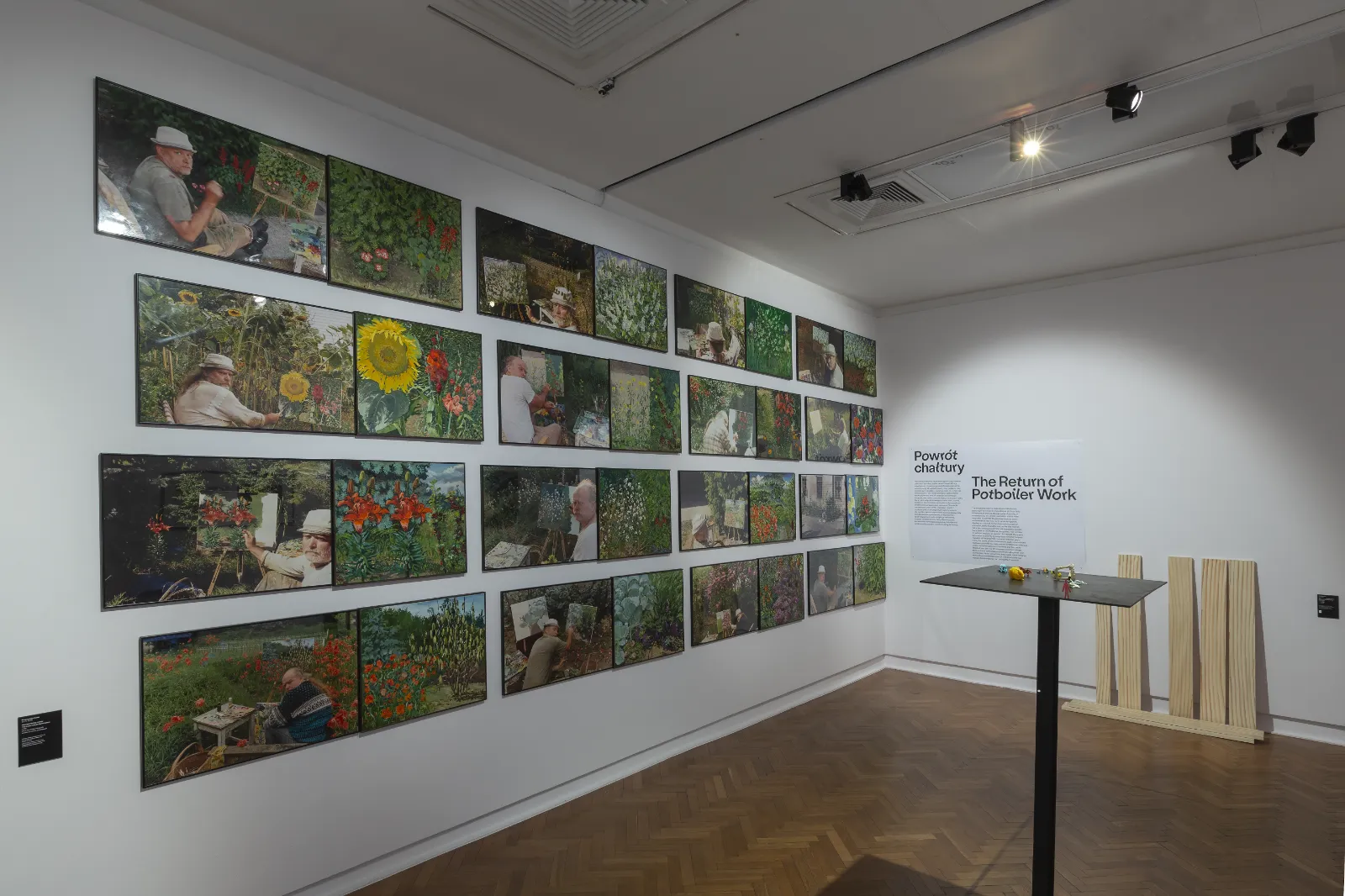
A wall in a white room covered with a grid of several small paintings depicting the same man painting outdoors. Beside it is the text “The Return of Potboiler Work.”
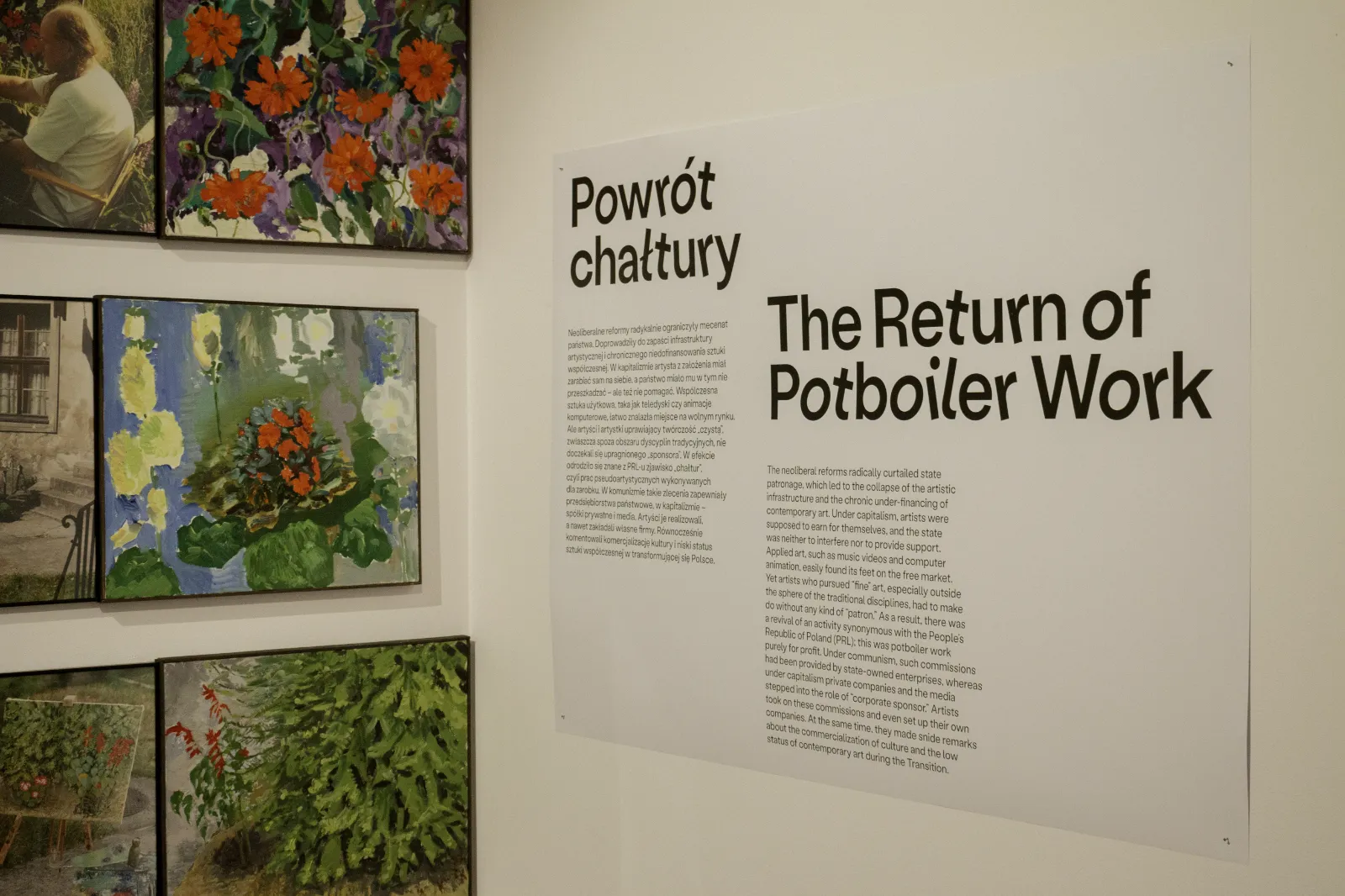
A close-up of a panel with the text “The Return of Potboiler Work.” To the left, fragments of colorful floral paintings are visible.

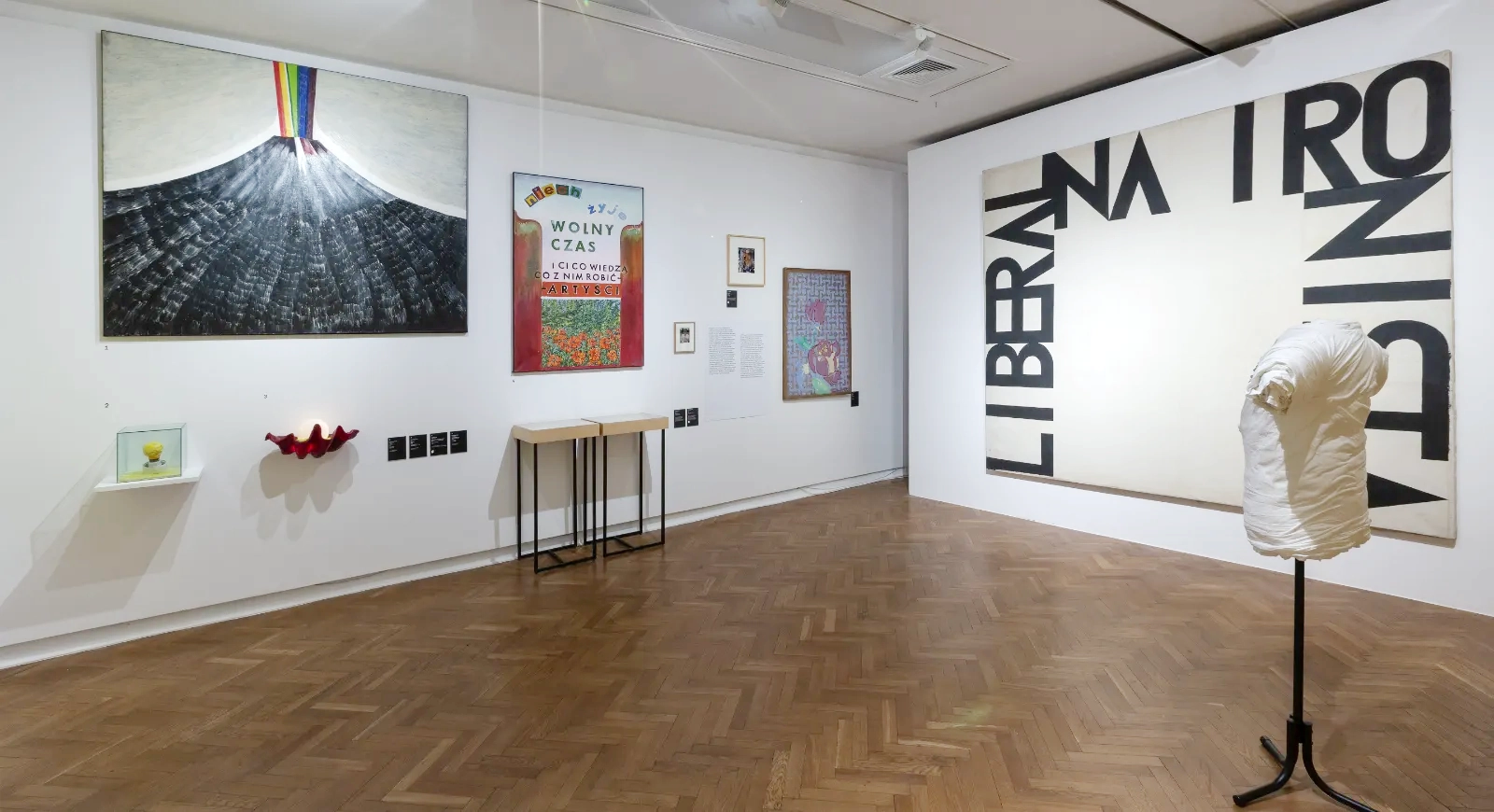
A view of a gallery room with a large painting featuring the words “LIBERAŁ” (Liberal) and “IRONISTA” (Ironist) in large black letters on a white background. Beside it is the rainbow volcano painting, and a white shirt on a stand is in the foreground.

Photos by HaWa, Jonasz Mazurkiewicz, and Piotr Tomczyk